Commercial LED Lighting Retrofit ROI for Capital Region Businesses: How the Numbers Work for a Retail Store
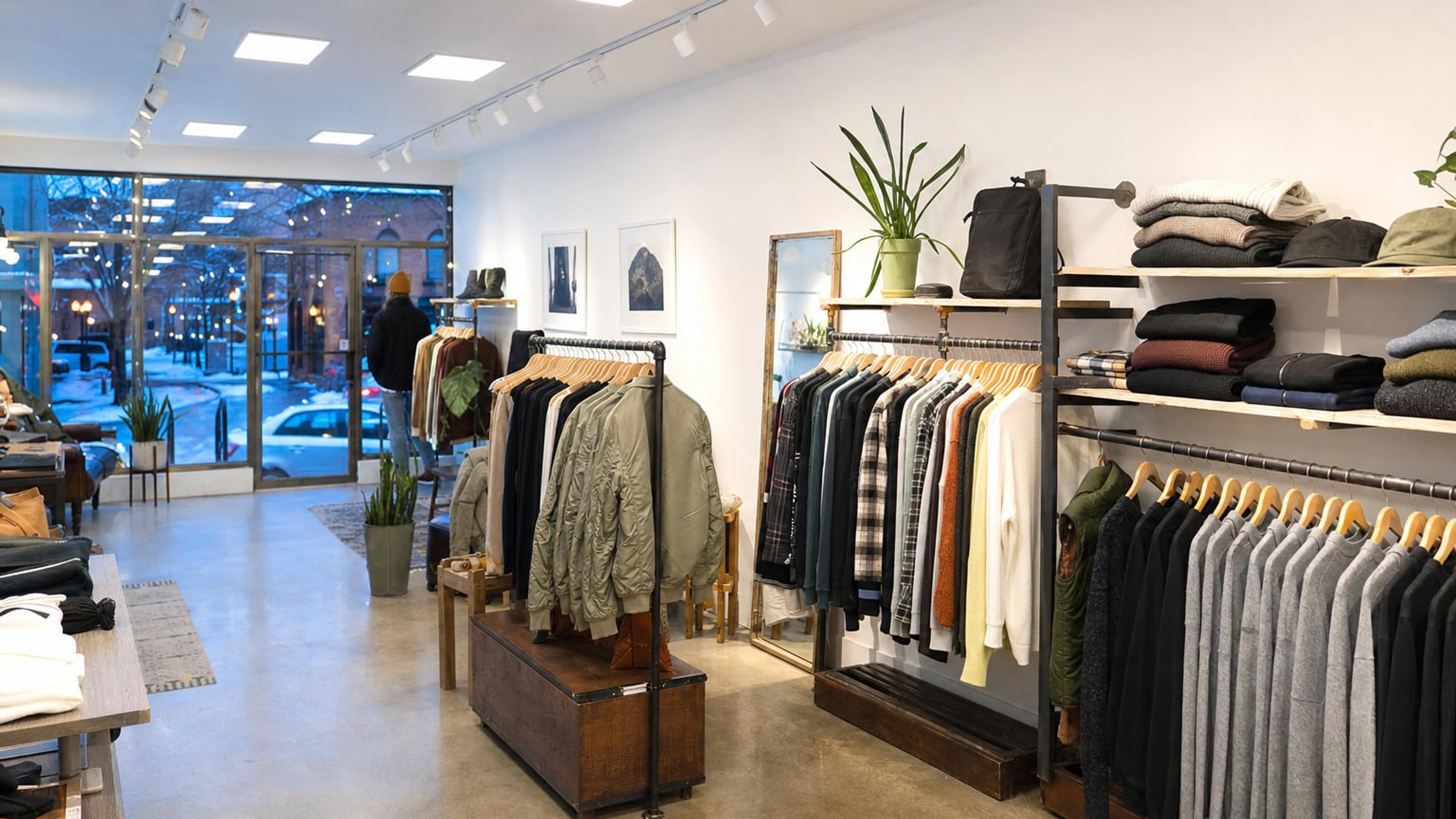
A commercial LED retrofit pays back through three things: lower lighting energy use (often around half or more compared with older fluorescent and metal halide fixtures), lower maintenance because LEDs last far longer, and utility incentives that reduce the upfront project cost. For a typical Capital Region retail store open long hours, those savings usually add up to a payback period measured in a few years rather than decades, after which the reduced energy use goes straight to the bottom line.
This guide walks through how to estimate the return for your own space, using a worked retail example, and lists the questions a store owner in Albany, Schenectady or Colonie should ask before signing off on a project.
Where the Savings Come From
1. Energy Use
Older fluorescent troffers, high-bay metal halide fixtures and halogen track lights convert much of their energy into heat. LED fixtures produce the same or better light with far fewer watts. In retail, where lights run all day, every hour of operation multiplies the difference.
2. Maintenance
Fluorescent tubes and ballasts fail on a regular cycle, and in stores with high ceilings each replacement can mean a lift, labor and a dark aisle while you wait. Quality LED fixtures are rated for tens of thousands of hours, so relamping trips drop sharply.
3. Cooling Load
Less heat from the lighting means the air conditioning works less in summer. It is a smaller effect than direct lighting savings, but it is real in stores packed with fixtures.
4. Incentives
National Grid and NYSERDA run programs that help businesses offset the cost of efficient lighting upgrades. Program details, eligibility and amounts change, so check current offerings through National Grid's business energy efficiency programs before finalizing a scope. Incentives often require pre-approval, so apply before the work starts.
A Worked Retail Example
The figures below are an illustrative example of how we estimate savings, based on a common layout. They are not a specific customer's results; your own numbers depend on your fixtures, hours and utility rate.
The space: a single-floor retail store of roughly 4,000 square feet, open about 12 hours a day, 360 days a year, lit by 60 four-lamp T8 fluorescent troffers.
| Item | Before (Fluorescent) | After (LED Panels) |
|---|---|---|
| Fixtures | 60 four-lamp T8 troffers | 60 flat LED panels |
| Approximate watts per fixture | 112 W | 40 W |
| Total connected lighting load | About 6.7 kW | About 2.4 kW |
| Annual operating hours | About 4,320 | About 4,320 |
| Annual lighting energy | About 29,000 kWh | About 10,400 kWh |
| Relamping cycle | Tubes and ballasts every few years | Rarely during the fixture's rated life |
In this example, lighting energy drops by roughly 64 percent, about 18,600 kWh per year. To turn that into dollars for your store, multiply the kWh saved by the energy and delivery rate on your National Grid bill, then add the maintenance you no longer spend on tubes, ballasts and lift time.
Estimating Payback
Simple payback is:
Payback (years) = Net project cost after incentives ÷ Annual savings (energy + maintenance)
The factors that move payback the most:
- Operating hours. The longer the lights run, the faster the payback. Stores open evenings and weekends recover the cost much sooner than a space used a few hours a day.
- What you are replacing. Metal halide high-bays and halogen track lights produce larger savings per fixture than newer fluorescent.
- Incentives. Pre-approved utility incentives can significantly shorten payback.
- Controls. Occupancy sensors in stockrooms, restrooms and offices, plus daylight dimming near storefront windows, add savings on top of the fixture change.
- Retrofit approach. Lamp swaps cost less upfront than new fixtures but may deliver less light quality and lifespan.
Retrofit Options: Lamps, Kits or New Fixtures
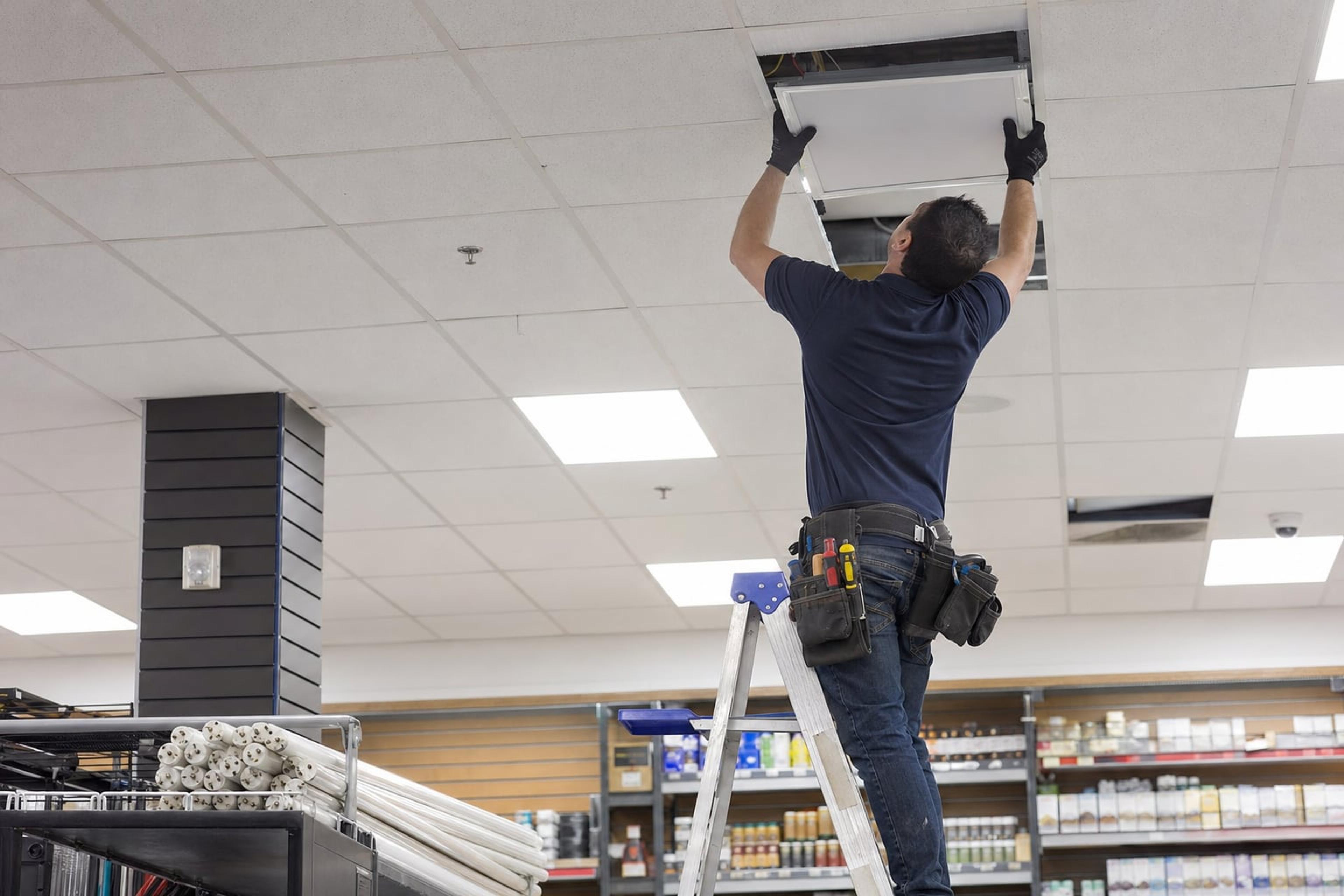
There are three common ways to convert a commercial space:
| Approach | What It Involves | Upfront Cost Level | Best For |
|---|---|---|---|
| LED tubes (lamp swap) | Replace fluorescent tubes with LED tubes, with or without the ballast | Lowest | Tight budgets, fixtures in good condition |
| Retrofit kits | Replace the fixture's internals with an LED kit, keeping the housing | Moderate | Drop ceilings where housings are sound |
| New LED fixtures | Remove old fixtures and install new LED panels, high-bays or track heads | Highest | Worn fixtures, layout changes, best light quality |
Ballast-bypass tubes and kits remove the ballast, which eliminates a common failure point. For retail sales floors, new fixtures or kits usually give the most even, attractive light, while lamp swaps can be enough in stockrooms and back-of-house areas.
Light Quality Sells Merchandise
For retailers, an LED retrofit is not only an energy project. Light quality affects how products look and how long shoppers stay.
- Color rendering (CRI). Higher CRI fixtures show fabrics, food and finishes more accurately.
- Color temperature. Warmer light suits boutiques and restaurants; neutral to cool light suits hardware, pharmacy and grocery.
- Accent lighting. LED track lighting highlights displays and window merchandising without the heat of halogen.
- Even light levels. LED panels reduce dark spots and flicker common with aging fluorescent tubes.
What to Ask Before Starting a Commercial Retrofit
- Will you complete a lighting audit with fixture counts, wattages and operating hours?
- Which utility incentives apply, and will you handle pre-approval paperwork?
- Do you recommend lamp swaps, kits or new fixtures for each area, and why?
- What CRI and color temperature do you recommend for my sales floor?
- Can the work be scheduled after hours or in phases to keep the store open?
- Should we add occupancy sensors or daylight controls?
- What warranties come with the fixtures and the installation?
- How will old lamps and ballasts be disposed of?
Fluorescent tubes contain small amounts of mercury, and some older ballasts require special handling, so disposal should be part of the plan.
Commercial Lighting in Schenectady, Albany and Colonie
The Capital Region's commercial corridors, from downtown Schenectady and Albany to the retail strips along Wolf Road in Colonie, are full of stores, restaurants and offices still running on fluorescent and metal halide lighting. Many of those spaces are open long hours, which makes them strong candidates for a retrofit.
I-ReM Electric & Construction is a fully insured electrical contractor providing commercial LED lighting upgrades, commercial electrical services and subpanel work for businesses across the Capital Region. We can phase work around your hours to minimize disruption.
Request a Commercial Lighting Audit
The first step is a walk-through: we count fixtures, note wattages and operating hours, and identify which incentives may apply. From there you get a clear scope and an estimate you can compare against your expected savings.
Thinking about LED for your store or office? Request a commercial lighting audit and we will map out the savings and the options.
Frequently Asked Questions About Commercial LED Retrofits
How much energy does an LED retrofit save?
Replacing fluorescent troffers with LED panels commonly cuts lighting energy by around half or more, and replacing metal halide or halogen fixtures often saves even more. Adding occupancy and daylight controls increases the savings further.
What is a typical payback period for a commercial LED retrofit?
It depends on operating hours, the fixtures being replaced, your utility rate and available incentives. Retail stores and other businesses with long operating hours generally see the fastest payback. A lighting audit gives you a realistic estimate for your space.
Are there National Grid rebates for LED lighting?
National Grid and NYSERDA offer programs for business lighting upgrades in upstate New York. Eligibility and incentive levels change, and many programs require pre-approval before installation, so confirm current offers before work begins.
Can a store stay open during an LED retrofit?
Usually, yes. Retrofits can be scheduled after hours or in phases, one section of the store at a time, so the sales floor stays open.
Should I use LED tubes or new LED fixtures?
LED tubes cost less upfront and work well where fixtures are in good shape, such as stockrooms. New fixtures or retrofit kits generally provide better light quality, longer life and fewer failure points, which matters most on the sales floor.
Related Articles
Have a Project In Mind?
Tell us about your project and we'll follow up with an estimate.