
Roof Heat Cables and Ice Dam Prevention: When to Call an Electrician in Upstate NY
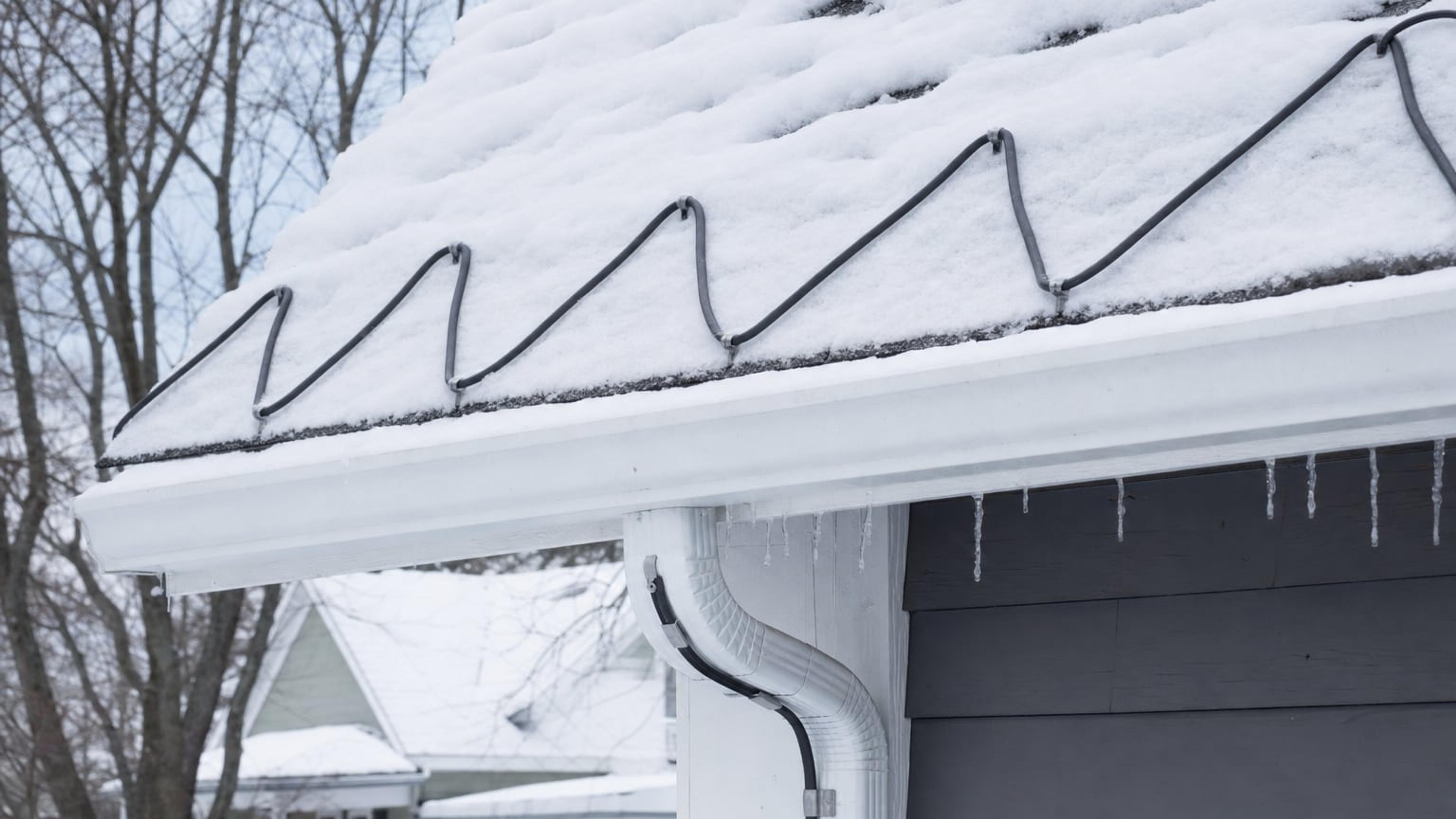
Roof heat cables prevent ice dams by keeping channels open along the roof edge, gutters and downspouts so meltwater can drain instead of refreezing and backing up under the shingles. They work best as a targeted fix on problem eaves, valleys and gutters, and they need a properly protected outdoor circuit with ground-fault protection to run safely all winter. Call an electrician when you need a new circuit or outlet for the cables, when existing cables trip a breaker or stop heating, or when you are adding cables to several sections of roof at once.
Capital Region winters, with repeated freeze-thaw cycles, heavy nor'easter snow, and plenty of older homes with limited attic insulation, make ice dams a regular problem from Niskayuna to Delmar. This guide explains what causes them, what heat cables can and cannot do, and what a safe installation looks like.
What Causes Ice Dams
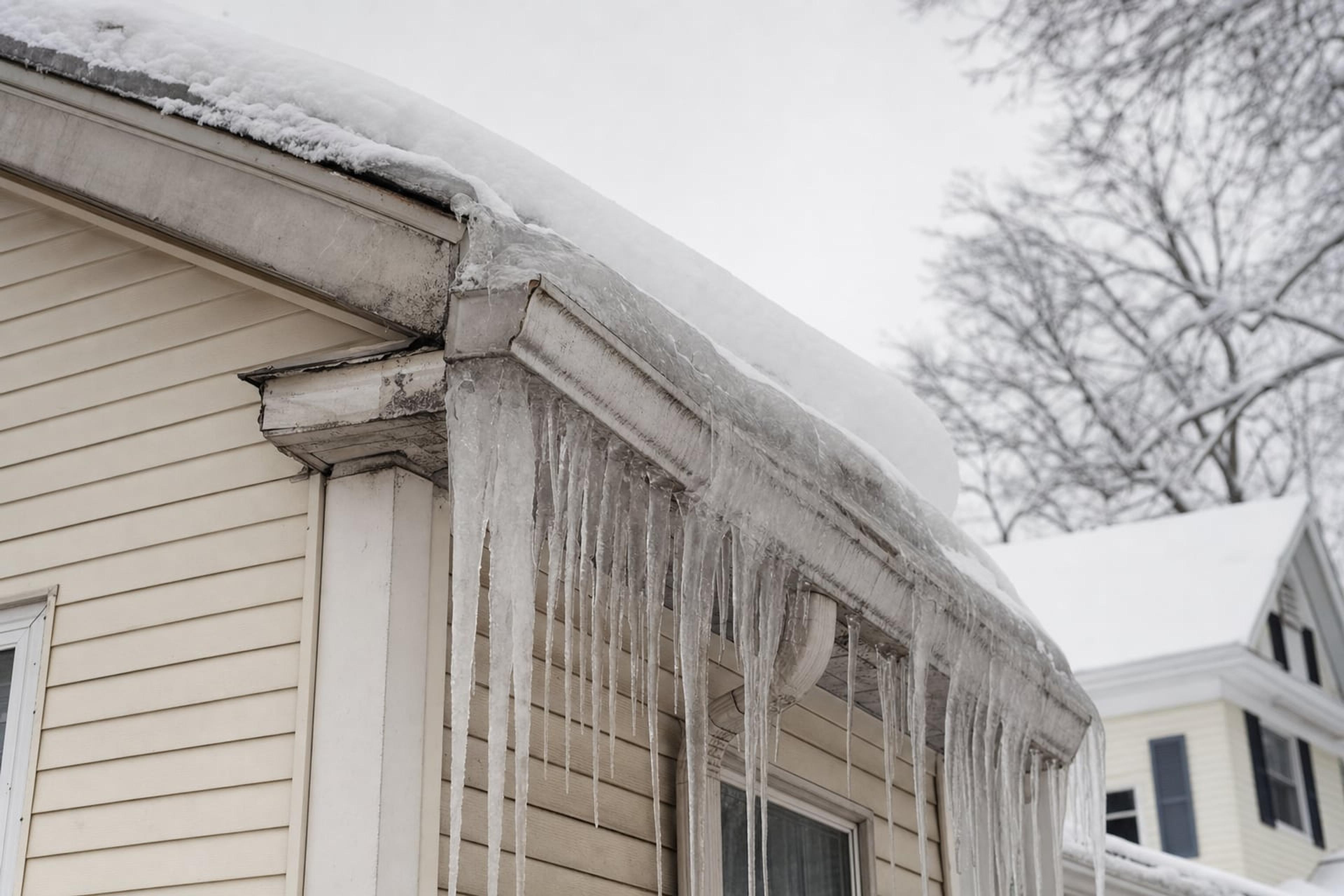
An ice dam starts with heat escaping from the living space into the attic. That warms the roof deck, and snow on the upper roof melts even when the outdoor temperature is below freezing. The meltwater runs down to the eave, which sits over the unheated overhang and stays cold, and refreezes there. Over days and storms the ice builds into a ridge that traps more water behind it.
That trapped water can work its way under shingles and into:
- Attic insulation and roof sheathing
- Ceilings and walls, causing stains, peeling paint and mold
- Soffits and fascia, causing rot
- Gutters, which can pull away from the house under the weight of ice
Warning signs include large icicles along the gutters, ice building up on the roof edge, water stains on upper-floor ceilings near exterior walls, and damp or frosty patches in the attic.
Heat Cables Treat the Symptom; Insulation Treats the Cause
The long-term fix for ice dams is keeping the roof deck cold: air sealing the attic floor, adding insulation and improving roof ventilation. NYSERDA offers resources and programs for home energy upgrades that address exactly this kind of heat loss.
But insulation and ventilation are not always practical right away, and some roofs develop ice dams no matter what because of their shape:
- Valleys where two roof planes meet
- Low-slope sections and porch roofs below a warmer main roof
- North-facing eaves that never see the sun
- Gutters and downspouts that freeze solid
- Skylights and dormers that create melt-and-refreeze spots
Heat cables are a practical tool for those problem areas, and many homeowners use them alongside insulation improvements.
How Roof Heat Cables Work
Roof and gutter de-icing cables are installed in a zigzag pattern along the lower edge of the roof, then run through the gutters and down the downspouts. They create warm paths that let water drain off the roof instead of pooling behind ice.
Self-Regulating vs. Constant-Wattage Cable
| Type | How It Works | Energy Use | Typical Use |
|---|---|---|---|
| Self-regulating | Output adjusts automatically, producing more heat when colder and less when warmer | Lower, adapts to conditions | Most residential roof and gutter systems |
| Constant-wattage | Produces the same heat along its length whenever it is on | Higher unless well controlled | Simple kits, short runs |
Self-regulating cable is the better choice for most Capital Region homes. It is less likely to overheat where cable crosses itself or sits under debris, and it uses less energy during milder winter days.
Controls
Cables can run on a simple switch, a thermostat that turns them on near freezing, or a snow and moisture sensor that runs them only when there is both cold and precipitation. Sensor-based controls cut operating time and energy use significantly compared with leaving cables on all winter.
Why the Electrical Circuit Matters
Heat cables run outdoors, in water and ice, for months at a time. The electrical side of the installation is where safety is won or lost.
- Ground-fault protection. The National Electrical Code requires ground-fault protection for fixed outdoor de-icing equipment. That protection shuts off the cable if current leaks to ground through damaged insulation and water.
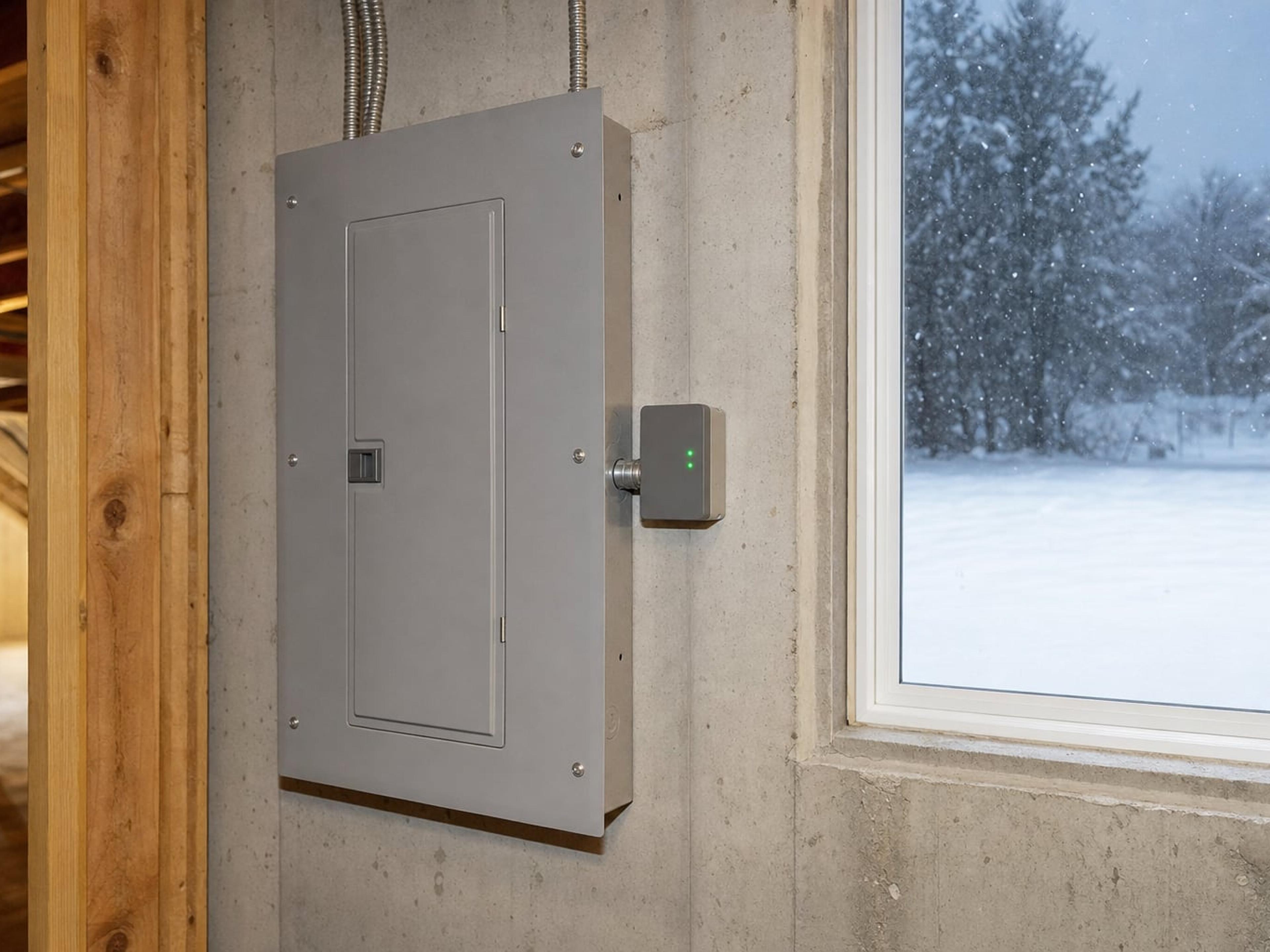
- Correct circuit size. Long runs of cable draw significant power. Several sections of roof may need a dedicated circuit rather than sharing an outdoor outlet with other loads.
- Weatherproof connections. Outlets and junction boxes need in-use covers and proper outdoor ratings.
- Safe cable routing. The power connection should be placed where it will not sit in meltwater or under falling ice.
- No extension cords. Plugging roof cables into a long extension cord through a window is a common and dangerous shortcut.
We see the same problems every winter: cables plugged into an old outdoor outlet without GFCI protection, a breaker that trips on cold nights because the cable shares a circuit with other loads, and cables that stopped heating years ago without anyone noticing. Our exterior building circuits and outdoor outlet services cover the power side of the installation.
What Drives Heat Cable Installation Cost
We do not quote prices in articles because every roof is different, but these factors determine the scope:
| Factor | Lower Scope | Higher Scope |
|---|---|---|
| Length of eave and gutter | One problem section | Full perimeter of the roof |
| Roof access | Single story, easy ladder access | Two or three stories, steep pitch |
| Downspouts | Few, short | Many, long runs to the ground |
| Power | Existing GFCI outdoor outlet nearby | New dedicated circuit from the panel |
| Controls | Manual switch | Thermostat or snow sensor controller |
| Cable type | Constant-wattage kit | Self-regulating cable |
Installation is best done in fall, before the first hard freeze and before snow covers the roof. Mounting cable on an icy roof is slower, more dangerous and less reliable.
Heat Cable Safety Tips for Homeowners
- Do not climb onto an icy roof to chip ice or install cable
- Never use a hammer, axe or salt-filled stockings on shingles; they damage the roof
- Do not use indoor extension cords for roof cables
- Check that cables heat up at the start of each season; a cable that stays cold may have failed
- If the cable trips its GFCI or breaker, leave it off and have it checked; the insulation may be damaged
- Replace cables that are kinked, cracked or have been stepped on by roof crews
Heat Cables in Niskayuna, Colonie and Delmar
Niskayuna, Colonie and Delmar have many mid-century colonials, ranches and capes with low-slope porch roofs, finished attic knee walls and limited insulation. Those features make ice dams a frequent winter problem. For many of these homes, targeted heat cable on the worst eaves, combined with insulation upgrades, keeps water out of ceilings until the attic can be fully addressed.
I-ReM Electric & Construction is a fully insured electrical contractor serving Niskayuna, Colonie, Delmar, Albany, Clifton Park, Saratoga Springs and the rest of the Capital Region. We install the dedicated circuits, GFCI protection and weatherproof outlets heat cable systems need, and we troubleshoot cables that trip or stop working. Planning for winter outages too? Our guide to whole-house generator installation covers backup power.
Schedule Before the First Freeze
The best time to set up roof heat cables is before snow and ice arrive. Once the roof is icy, installation becomes harder and riskier.
Ice dams last winter? Schedule before the first freeze and we will set up a safe, dedicated circuit for your heat cables.
Frequently Asked Questions About Roof Heat Cables
Do roof heat cables really prevent ice dams?
They prevent damage from ice dams by keeping drainage paths open along the eave, gutters and downspouts so meltwater can run off. They do not stop the heat loss that causes ice dams; air sealing, insulation and ventilation address that.
Do heat cables need a GFCI outlet?
Yes. Fixed outdoor de-icing equipment requires ground-fault protection under the National Electrical Code. It shuts off power if current leaks through damaged insulation and water.
Should heat cables stay on all winter?
Not usually. A thermostat or snow and moisture sensor runs them only when conditions call for it, which saves energy and extends cable life. Self-regulating cable also reduces its output automatically when it is warmer.
When is the best time to install roof heat cables?
In the fall, before the first hard freeze and snowfall. Installing on a dry, clear roof is safer and lets the cable be secured properly.
Why does my heat cable keep tripping the breaker?
Damaged insulation, water in a connection, a failing cable or an overloaded circuit can all cause trips. Leave it off and have an electrician test the cable and the circuit before the next storm.
Related Articles
Have a Project In Mind?
Tell us about your project and we'll follow up with an estimate.