
Holiday Electrical Safety Checklist: Outlets, Extension Cords, and Roofline Lights (Capital Region Edition)
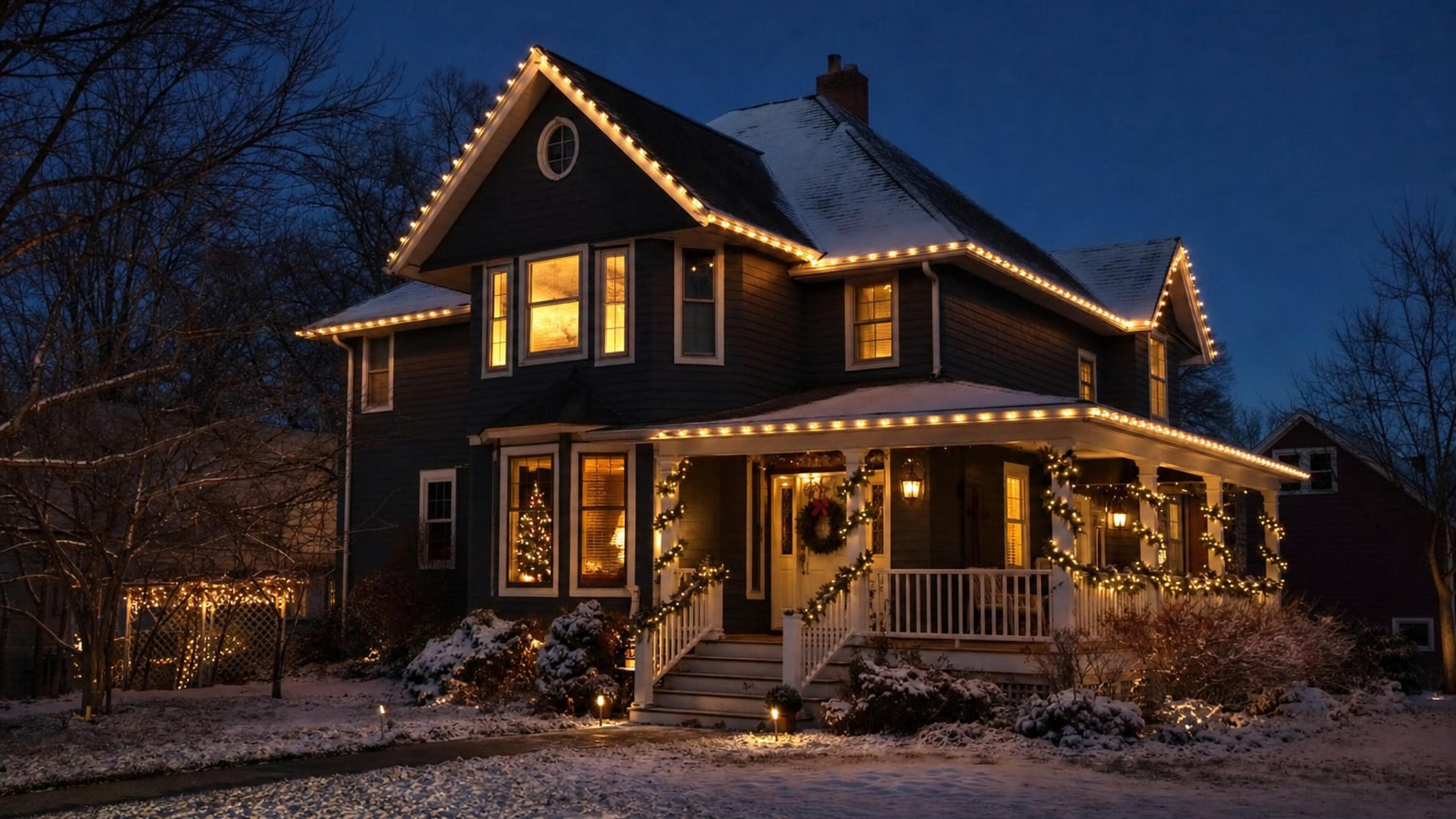
The safest holiday setup uses outdoor-rated lights and cords, plugs everything outdoors into GFCI-protected outlets with weatherproof covers, spreads loads across circuits instead of chaining strands and power strips, keeps space heaters on their own wall outlets, and turns decorations off when no one is home or awake. Those few habits prevent most of the holiday electrical problems we are called about each winter in the Capital Region.
Upstate New York adds its own challenges: snow and freezing rain on outdoor connections, long nights that keep lights running for hours, and space heaters working overtime in older homes. Use the 12-point checklist below before the decorations go up, and keep it handy until they come down.
Before You Decorate
1. Inspect Every Strand and Cord
Unpack lights and cords in good light and check for cracked or brittle insulation, crushed or chewed wires, loose or broken sockets, and bent or damaged plugs. Lights stored in a cold garage or a hot attic all year often have damaged insulation. Throw away damaged sets rather than taping them.
2. Check the Ratings on the Label
Look for a mark from a recognized testing laboratory, such as UL, ETL or CSA. Lights and cords marked for indoor use only should never go outside, even on a covered porch. Outdoor-rated products are built to handle moisture and cold.
3. Know Your Circuits
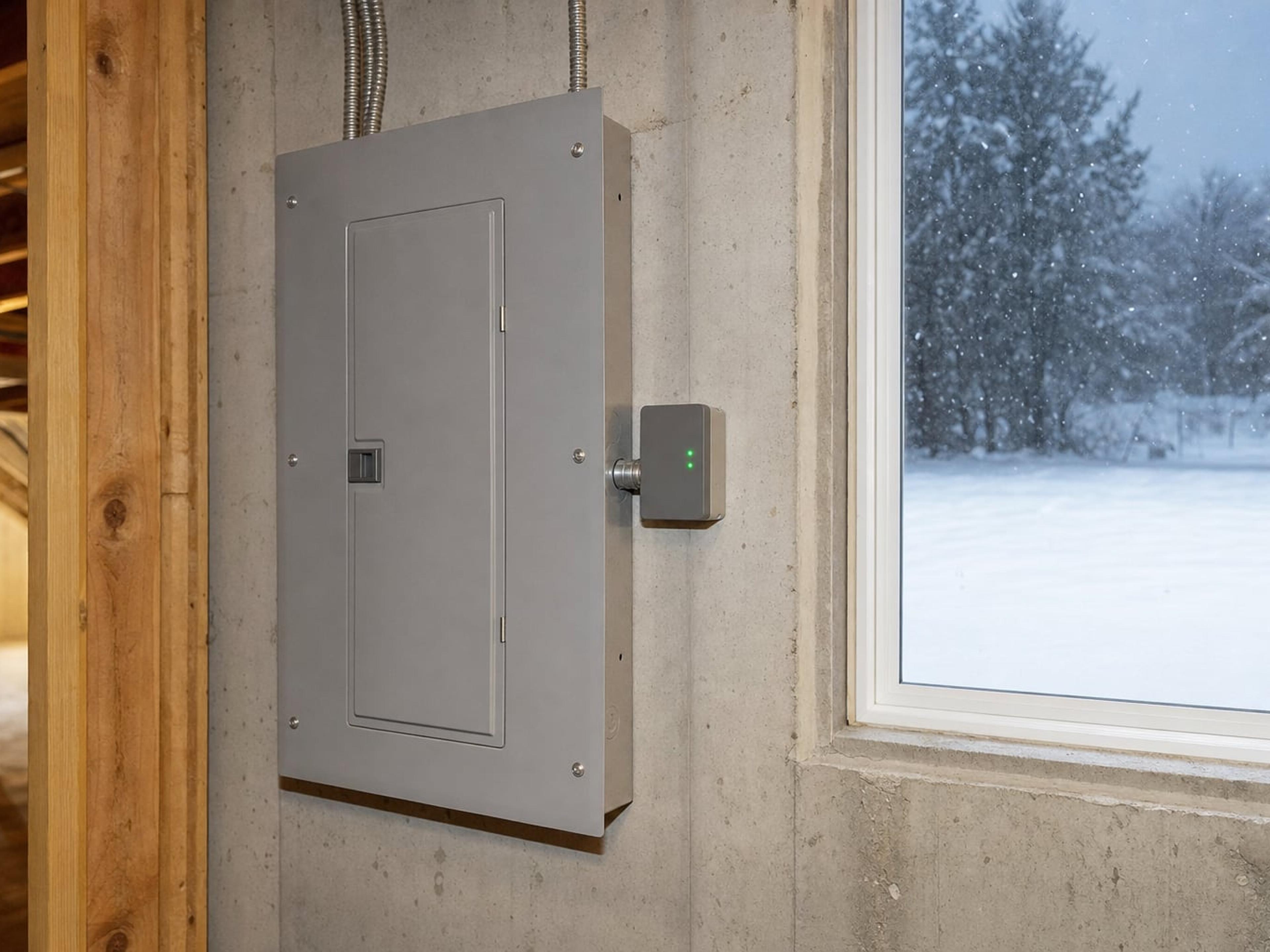
Before plugging in a display, figure out which outlets share a circuit. Inside the house, a single bedroom or living room circuit may already carry lamps, a TV and electronics. Adding a tree, a village display and a space heater can push it past its limit. If you are not sure which outlets share a breaker, a quick test with the breaker off will tell you.
Outdoor Lights and Outlets
4. Plug Outdoor Decorations Into GFCI Outlets Only
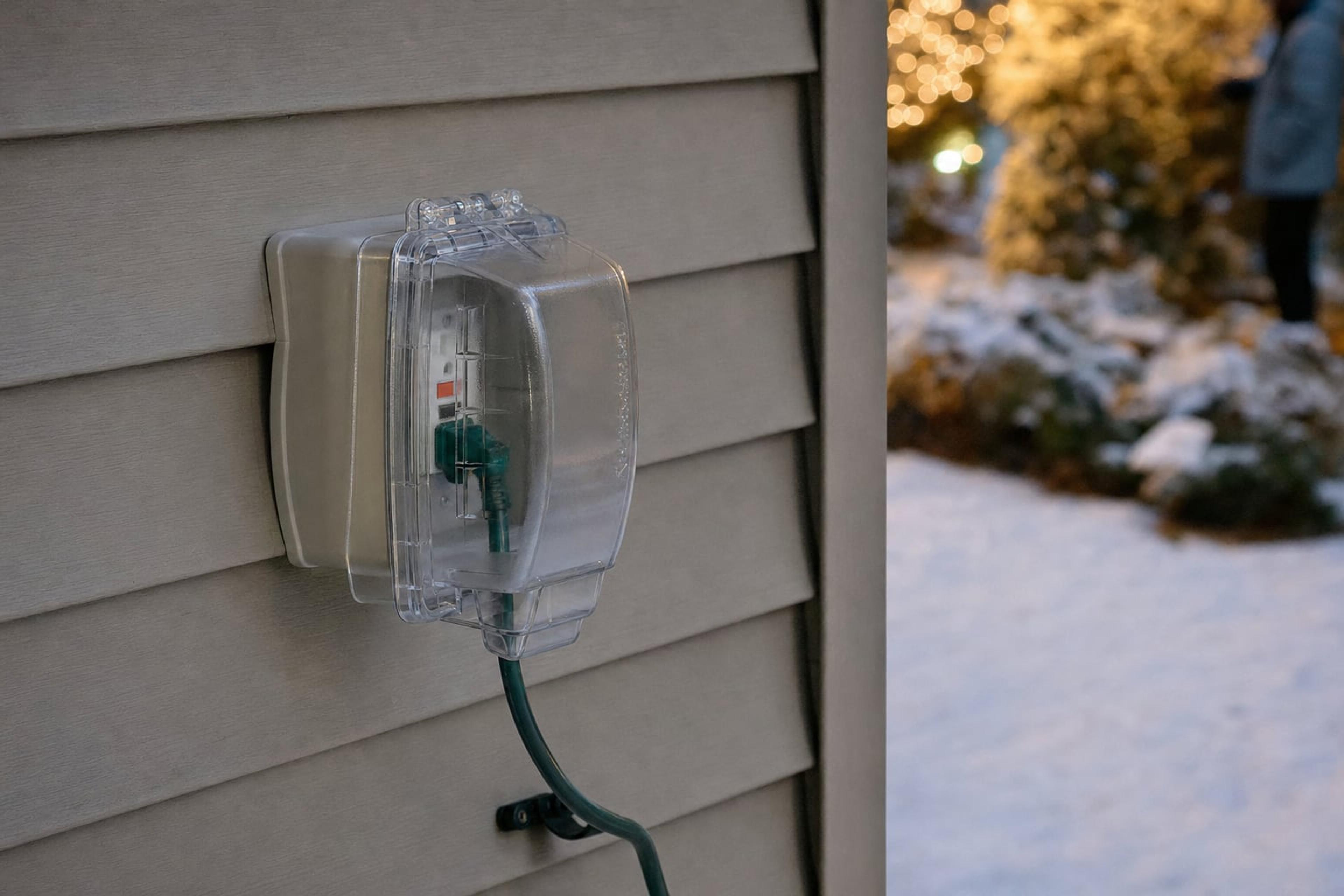
GFCI (ground-fault circuit interrupter) protection cuts power within a fraction of a second if current leaks to ground, such as through wet grass, snow or a person. Outdoor outlets should be GFCI protected. Press the TEST button on each outdoor GFCI before decorating, then RESET. If it will not trip or will not reset, have it replaced.
5. Use Weatherproof In-Use Covers
A flat cover that only seals when nothing is plugged in does not protect a connection that is in use all season. An in-use or "bubble" cover stays closed over the plugs and keeps snow, ice and rain out. If your home has old flat covers, upgrading them is a small job with a big safety benefit. See our outdoor outlet installation service.
6. Keep Connections Off the Ground
Snowmelt and rain pool around plugs left in the yard. Raise connections off the ground with stakes or hangers, keep them out of gutters and downspouts, and point plug connections downward so water runs off.
7. Hang Roofline Lights With Clips, Not Staples or Nails
Staples and nails can pierce insulation and create a shock or fire hazard. Use plastic light clips designed for gutters and shingles. Ladders, ice and rooflines are a dangerous mix, so work on dry days, keep ladders away from the service drop where power enters the house, and have someone steady the ladder.
If you put up roofline lights every year, permanent holiday lighting installed by an electrician removes the ladder trips and puts the system on a properly protected circuit.
Extension Cords and Power Strips
8. Use the Right Cord for the Job
Outdoors, use only cords marked for outdoor use, and choose a gauge heavy enough for the load and the length. Thin indoor cords can overheat when they carry a big display. Never run cords under rugs, through doorways or windows where they can be pinched, or across walkways where they become a trip hazard.
9. Do Not Daisy-Chain
Plugging power strips into power strips, or extension cords into extension cords, concentrates heat at each connection. Follow the light manufacturer's limit on how many strands can be connected end to end; older incandescent strands usually allow far fewer than LED sets.
10. Switch to LED Lights Where You Can
LED holiday lights use a fraction of the power of incandescent strands, run cooler and let you connect more strands safely. They also reduce the risk of overloading a circuit and the chance of heat damage to a dry tree.
Indoors: Trees, Heaters and Habits
11. Keep Space Heaters on Their Own Outlet
The Consumer Product Safety Commission and the Electrical Safety Foundation International both warn that space heaters should be plugged directly into a wall outlet, never into a power strip or extension cord. Keep heaters at least three feet from trees, wrapping paper, curtains and furniture. If a heater trips the breaker, it is sharing a circuit with too much else; our guide on why your breaker keeps tripping explains how to sort that out.
12. Turn It Off and Test Your Alarms
Use timers or smart plugs so lights turn off overnight and while you are away. Keep a natural tree well watered, since a dry tree ignites quickly. And test your smoke and carbon monoxide alarms before the season starts, since the holidays bring more cooking, candles, heaters and guests. Our team handles smoke detector inspection and replacement.
The CPSC holiday safety guidance and ESFI both publish additional seasonal tips.
Warning Signs to Watch For This Season
Turn off and unplug decorations, and call an electrician if you notice:
- An outlet, plug or cord that feels warm or hot
- A burning or hot plastic smell
- Lights that flicker or dim when other appliances turn on
- An outdoor GFCI that trips repeatedly even when the lights are dry
- Scorch marks or discoloration on an outlet or cover plate
- A breaker that trips every evening when the display comes on
Outdoor Outlets in Saratoga Springs, Ballston Spa and Malta
Many homes across Saratoga Springs, Ballston Spa and Malta have one outdoor outlet, often on the wrong side of the house and without a proper in-use cover. That leads to long extension cord runs across lawns and driveways every December. Adding a GFCI-protected outdoor outlet near the front of the house, or a dedicated circuit for a larger display, solves the problem for every season after.
I-ReM Electric & Construction is a fully insured electrical contractor serving Saratoga County, Albany, Clifton Park, Schenectady and the rest of the Capital Region. We install outdoor outlets, GFCI safety outlets, exterior circuits and light timers.
Book an Outdoor Outlet Install
Before the first strand goes up, make sure your outdoor outlets are where you need them, GFCI protected and covered for winter.
Need outdoor power for the holidays? Book an outdoor outlet install and get your display on a safe, weatherproof connection.
Frequently Asked Questions About Holiday Electrical Safety
Do outdoor holiday lights need to be plugged into a GFCI outlet?
Yes. Outdoor decorations should always be plugged into GFCI-protected outlets. GFCI protection shuts off power quickly if current leaks to ground through water, snow or a person, which greatly reduces shock risk.
How many strands of Christmas lights can I connect together?
Follow the limit printed on the light set's tag or packaging. LED sets usually allow many more connected strands than incandescent sets. Never exceed the manufacturer's limit, and do not plug multiple chains into a single power strip.
Why does my outdoor GFCI keep tripping when it rains?
Moisture is reaching a plug, connection or light socket and creating a path to ground. Lift connections off the ground, use in-use covers and check for damaged strands. If it trips with everything unplugged, the outlet or wiring should be checked.
Can I leave my holiday lights on overnight?
It is safer to turn them off when you go to bed or leave the house. A timer or smart plug makes that automatic and reduces energy use.
Is it safe to use an indoor extension cord outside if it is covered?
No. Indoor cords are not built for moisture, cold or UV exposure, and a covered porch is still outdoors. Use cords specifically marked for outdoor use.
Related Articles
Have a Project In Mind?
Tell us about your project and we'll follow up with an estimate.