
How Much Does It Cost to Install a Level 2 EV Charger at Home in New York?
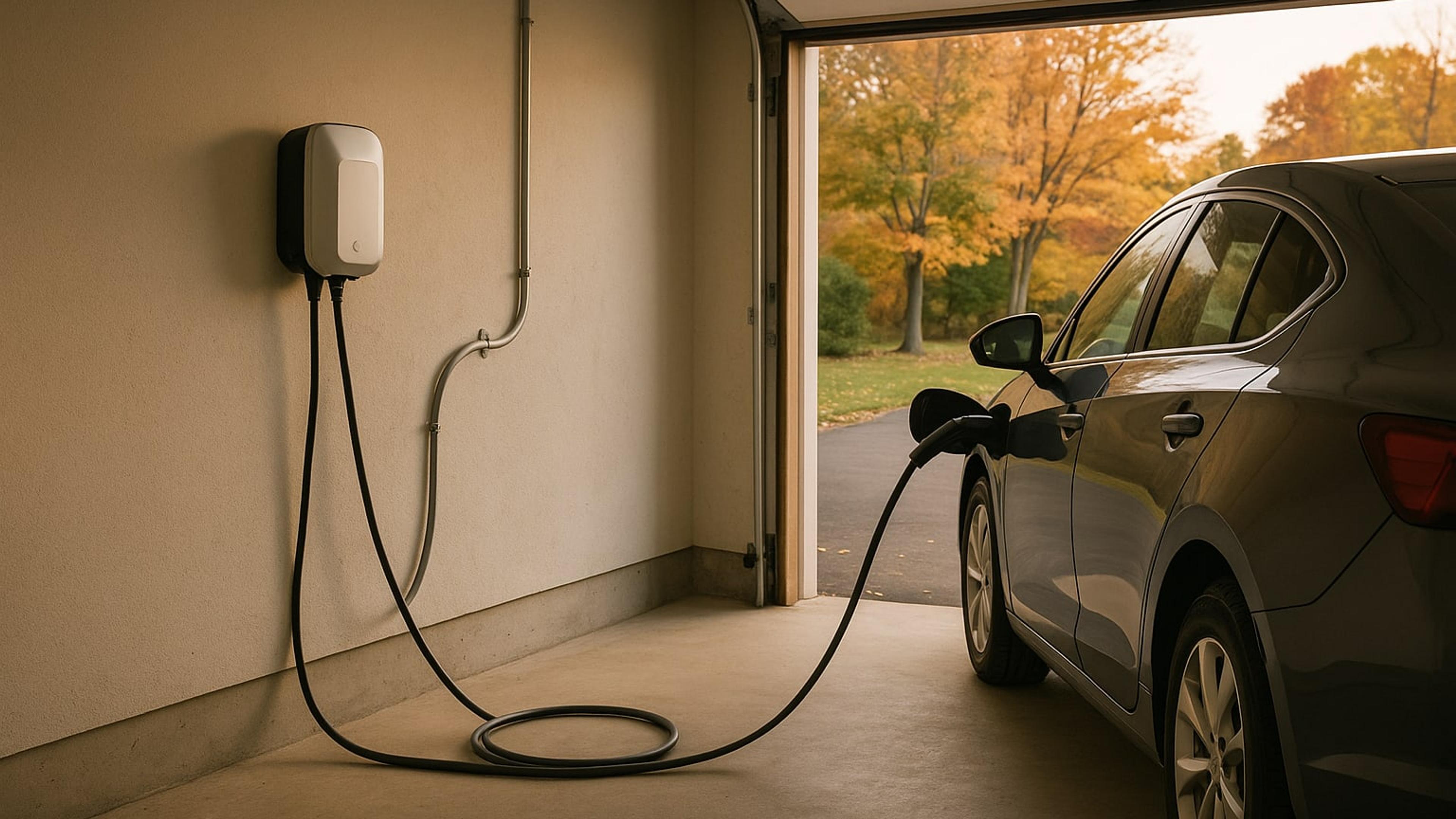
If you just bought an electric vehicle, or you are about to, one of the first questions is how to charge it at home. Plugging into a regular 120-volt outlet works, but it can take more than a day to refill a large battery. A Level 2 charger on a 240-volt circuit can do the same job overnight.
The installation cost depends far less on the charger you pick than on your house: how much capacity your electrical panel has left, how far the charger will be from the panel, whether the wire has to travel through finished walls, and what your town requires for permits and inspection.
This guide explains what drives Level 2 EV charger installation cost in the Capital Region, what to expect from a Tesla Wall Connector or another hardwired charger, how permits work, and which incentives actually apply to homeowners in New York.
Level 1 vs. Level 2 Charging
Level 1 uses a standard 120-volt household outlet and the cord that comes with most EVs. It adds only a few miles of range per hour, which can work if you drive short distances and park for long periods.
Level 2 uses a 240-volt circuit, the same type that powers an electric dryer or range. It adds many times more range per hour and fully recharges most EVs overnight. For most Capital Region drivers, especially in winter when batteries lose range in the cold, Level 2 is the practical choice.
A Level 2 setup can be either a hardwired charger connected directly to a dedicated circuit, or a plug-in charger that uses a 240-volt receptacle such as a NEMA 14-50. Hardwired installations are often preferred for higher-power chargers and outdoor locations.
What Drives the Cost: A Relative Breakdown
The table below shows how common installation scenarios compare with each other and what typically moves the price. Exact pricing depends on your home and requires a site visit or a review of panel photos.
| Installation Scenario | Relative Cost | Main Cost Drivers |
|---|---|---|
| Charger in attached garage next to the panel | Lowest | Short wire run, open breaker spaces, enough panel capacity |
| Charger in garage across the house from the panel | Moderate | Longer wire run, conduit, routing through finished areas |
| Outdoor or driveway charger | Moderate | Weather-rated equipment, exterior conduit, possible trenching |
| Detached garage | Moderate to high | Trenching or overhead feed, possible subpanel |
| Installation that needs a panel upgrade or load management | Highest | Panel or service upgrade, utility coordination, or load-management equipment |
Pricing is project-specific. The charger itself may or may not be included in a quote, so always check what each estimate covers.
The Dedicated Circuit
A Level 2 charger needs its own dedicated 240-volt circuit. Most home chargers run on a 40-amp or 50-amp circuit, and higher-output chargers such as a Tesla Wall Connector can use a 60-amp circuit when the panel supports it.
Because an EV charges for hours at a time, the charging current is treated as a continuous load. The circuit and breaker must be sized above the charger's actual output, using wire rated for the full circuit. The farther the charger sits from the panel, the more wire and conduit the job needs, and long runs may require a larger wire size.
Panel Capacity: The Question That Decides Everything
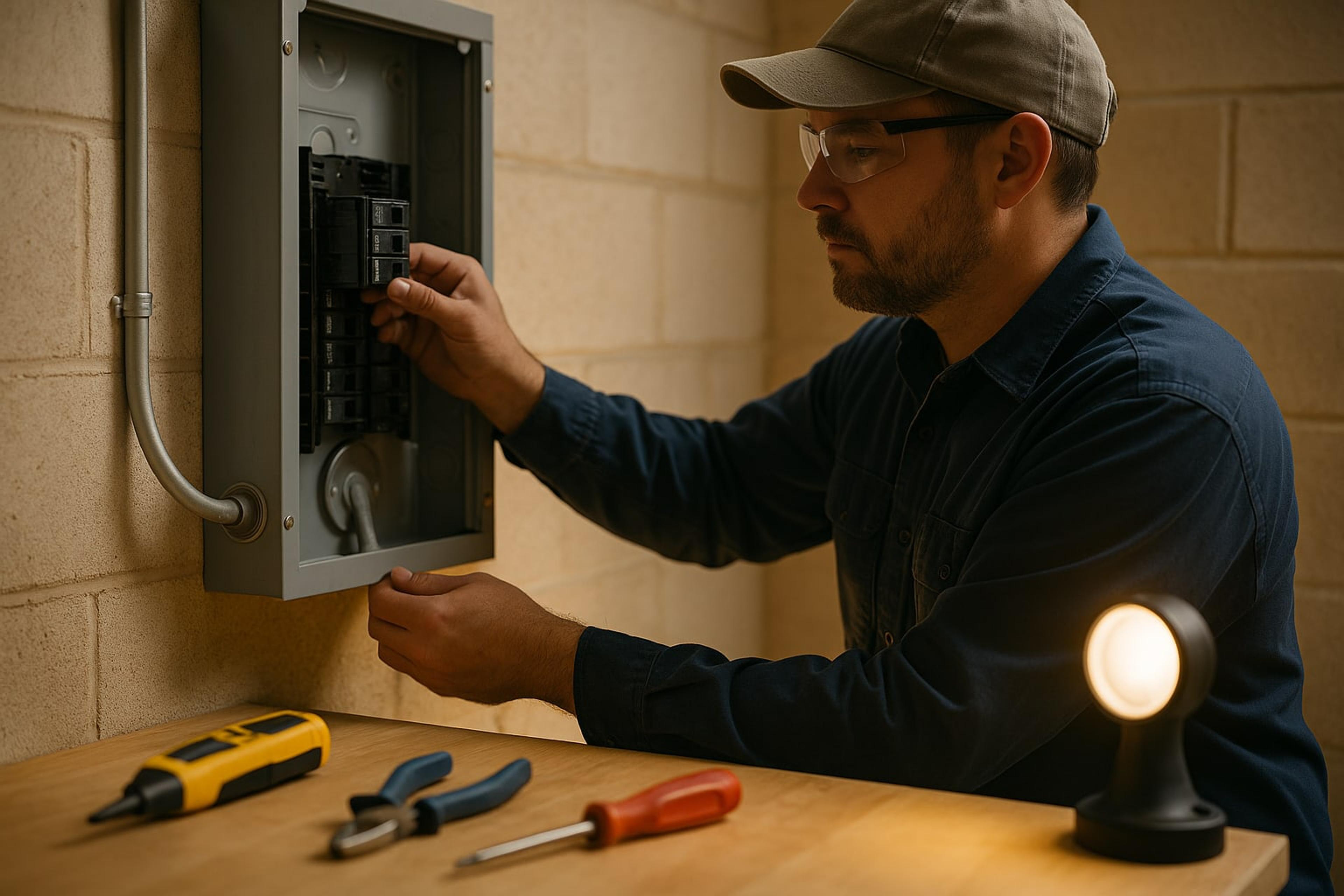
Before anything is installed, an electrician should confirm that your electrical service can carry the extra load. A common mistake is assuming that an open slot in the panel means there is enough capacity. It does not.
A load calculation considers your service size (often 100 or 200 amps), your heating and cooling equipment, electric cooking, water heating, a hot tub or well pump, and any other large loads. Based on that, there are usually four paths:
- Enough capacity: add the dedicated circuit and install the charger.
- Limited capacity: set the charger to a lower output, which still charges most EVs overnight.
- Load management: add a device that pauses or reduces charging when other large loads run, avoiding a service upgrade.
- Insufficient capacity: upgrade the panel or service, which can also prepare the home for a heat pump or a second EV.
Many older homes in Albany, Troy and Schenectady have 100-amp services with full panels, while newer homes in Clifton Park and Malta usually have more room. That difference is the single biggest reason quotes vary.
Choosing Where the Charger Goes
Location affects both convenience and cost:
- Attached garage near the panel: usually the simplest installation.
- Garage wall opposite the panel: the wire may need to run through a finished basement or ceiling.
- Outside on the driveway: requires an outdoor-rated charger, weatherproof connections and protection from snowplows and shovels.
- Detached garage: may need a trench or an overhead feed and sometimes a subpanel.
Think about where you park, which side the car's charge port is on, and whether a second EV might share the space later. A cable that reaches both parking spots can save a future installation.
Tesla Wall Connector and Other Hardwired Chargers
The Tesla Wall Connector is a popular hardwired option, and newer versions can charge other EVs with the right connector. Other brands offer smart chargers with app control, scheduling and energy tracking.
Whatever you choose, look for a charger that is safety certified for the U.S. market, rated for outdoor use if it will be outside, and compatible with your vehicle's connector. Smart features such as scheduling charging for off-peak hours can lower your electricity bill if your utility offers time-of-use rates.
Permits and Inspections in New York
Adding a 240-volt circuit for an EV charger is electrical work that typically requires a permit and an inspection in Capital Region municipalities. Requirements are handled by the local authority, so the process differs between the City of Albany, the Town of Clifton Park, Saratoga Springs, Colonie and other towns.
New York's residential electrical requirements follow the National Electrical Code, which includes specific rules for EV charging equipment, circuit sizing and ground-fault protection. A permitted installation also creates a record that can matter for insurance and when you sell your home.
Ask whether your quote includes permit filing and scheduling the inspection.
NYSERDA and Other Incentives: What Applies to Homeowners
Incentives for EV charging in New York change often, so it is worth checking current programs before you buy. As of 2026:
- NYSERDA's Charge Ready NY 2.0 program offers rebates for Level 2 chargers at workplaces, multifamily buildings and hotels. It does not provide direct rebates for single-family home installations.
- Utility programs sometimes offer incentives or off-peak charging rates for residential customers. Check with National Grid or your utility for what is currently available.
- Federal tax credits for home charging equipment have changed over time; confirm current eligibility with a tax professional.
If you own a multifamily building or run a business with parking in the Capital Region, Charge Ready NY 2.0 may apply, and the installation planning is different from a single-family home.
How to Get an Accurate EV Charger Quote
You can speed up the process by sharing:
- Photos of your electrical panel with the cover on and the main breaker label visible
- A photo of where you want the charger and where you park
- The approximate distance from the panel to the charger location
- Your vehicle model and the charger you plan to use, if you already bought one
- Any other large loads you plan to add, such as a heat pump or a second EV
When comparing quotes, make sure they include the same scope: circuit size, wire and conduit, charger mounting, permit and inspection, and any panel work or load management.
EV Charger Installation in Clifton Park, Latham, Niskayuna and Saratoga Springs
Across the Capital Region, garages, driveways and electrical panels vary widely. A newer Clifton Park home with a 200-amp panel next to the garage is a very different project from an older Niskayuna or Latham home with a full 100-amp panel in the far corner of the basement.
I-ReM Electric & Construction is a fully insured electrical contractor serving Clifton Park, Latham, Niskayuna, Saratoga Springs, Albany, Schenectady and surrounding communities. We evaluate panel capacity, install dedicated EV charger circuits, mount hardwired chargers including Tesla Wall Connectors, and handle panel upgrades and load management when needed.
Learn more about EV charger installation or contact a Clifton Park electrician to schedule a site visit.
Get an EV Charger Estimate
The right EV charger installation is the one that fits your panel, your parking and your driving habits. A short site visit, or a few good photos, is usually enough to tell you whether you need a simple dedicated circuit or a panel upgrade first.
Ready to charge at home? Get an EV charger estimate and we will review your panel, location and charger options.
Frequently Asked Questions About Home EV Charger Installation
How much does it cost to install a Level 2 EV charger at home?
It depends mainly on your panel capacity, the distance between the panel and the charger, whether the wire runs through finished areas, indoor or outdoor placement, and permit requirements. A charger near the panel in an attached garage sits at the low end; a detached garage or a panel upgrade sits at the high end.
Do I need a 200-amp panel for an EV charger?
Not necessarily. Many homes with 100-amp service can add a Level 2 charger at a reduced output or with load management. A load calculation tells you whether your current service is enough.
Do I need a permit to install an EV charger in New York?
In most Capital Region municipalities, yes. Adding a dedicated 240-volt circuit usually requires an electrical permit and inspection. Your installer should confirm the local requirements and handle the filing.
Can I install a Tesla Wall Connector myself?
Mounting the unit is simple, but connecting it requires a new dedicated circuit, correct breaker and wire sizing, and usually a permit and inspection. That work should be done by a qualified electrician.
Does NYSERDA offer a rebate for home EV chargers?
NYSERDA's Charge Ready NY 2.0 program focuses on workplaces, multifamily buildings and hotels, not single-family homes. Check with your utility for residential incentives or off-peak charging rates.
Is a hardwired or plug-in charger better?
Both work. Hardwired chargers avoid a receptacle that can wear out with frequent plugging and are often preferred for higher outputs and outdoor installs. Plug-in chargers on a 240-volt receptacle are easier to replace or take with you if you move.
Related Articles
Have a Project In Mind?
Tell us about your project and we'll follow up with an estimate.