Overloaded Kitchen Circuits on Thanksgiving: Why the Breaker Trips and What to Do
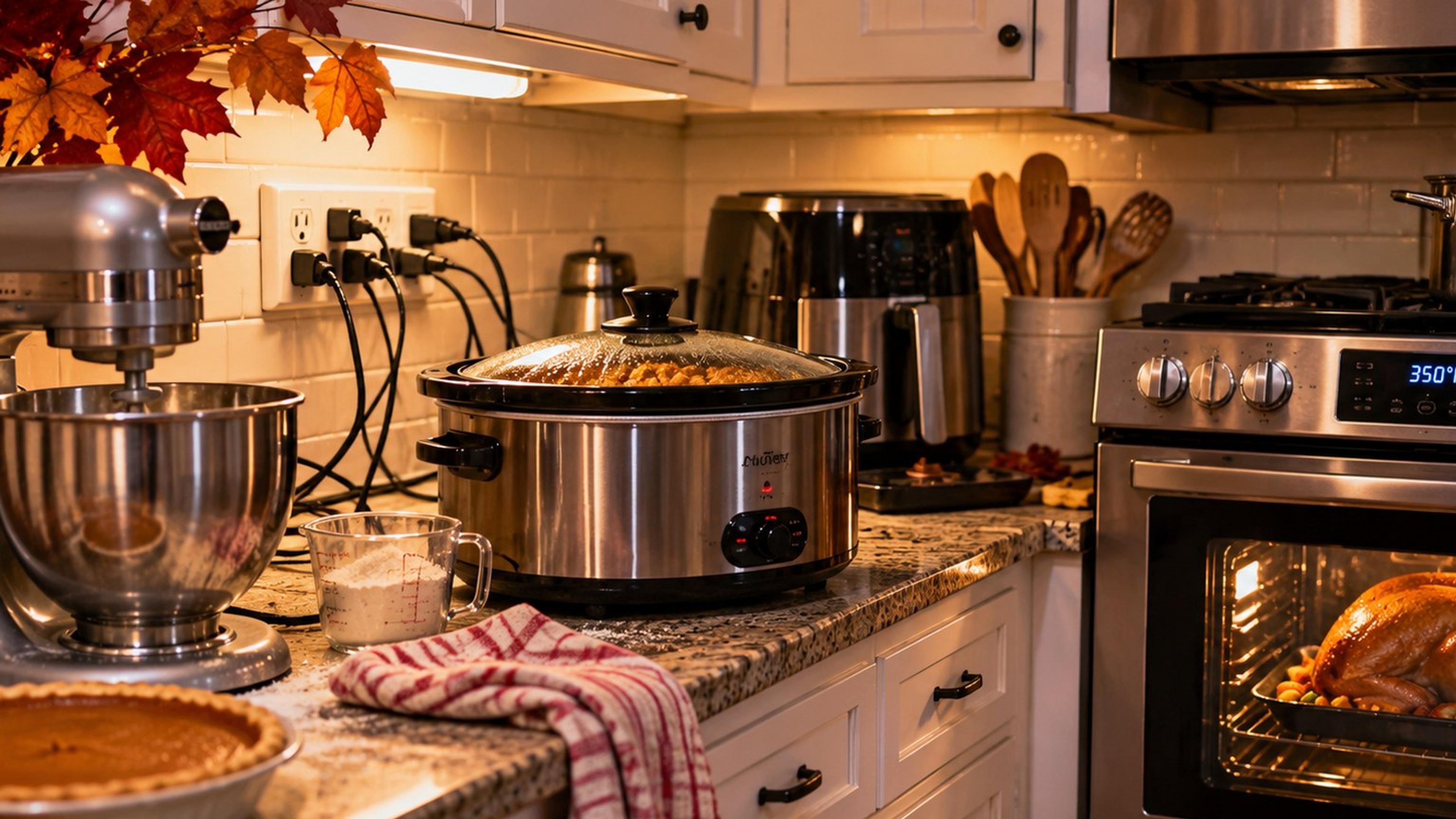
Kitchen breakers trip on Thanksgiving because several heating appliances end up on the same countertop circuit. A 20-amp, 120-volt circuit can supply about 2,400 watts, and an air fryer plus an electric roaster can exceed that by themselves. To get dinner back on track, turn off the appliances on the dead outlets, unplug them, move one to an outlet on a different circuit, and reset the breaker once. If it trips again right away, or you notice heat, buzzing or a burning smell, leave it off and call an electrician.
The good news is that a tripping breaker usually means the protection did its job. Here is how to share the load today and what to change before the next big dinner.
Why Thanksgiving Overloads Kitchen Circuits
On a normal evening, you might run the microwave and then the toaster. On Thanksgiving, the slow cooker, warming tray, roaster, coffee maker and mixer all want counter space at the same time, often clustered around the two most convenient outlets.
Outlets that look separate may share one breaker. Modern kitchens generally need at least two 20-amp small-appliance circuits for the countertop, and those circuits often serve the dining area too. Older kitchens may have only one, sometimes shared with the refrigerator or a neighboring room. A coffee urn plugged in next to the dining table can therefore be the appliance that takes out the counter.
Your electric oven is usually not the problem. A hardwired or 240-volt range normally has its own circuit. A gas range uses little electricity, but its igniter and controls still need power.
How Much Can One Kitchen Circuit Handle?
Amps equal watts divided by volts. Check the nameplate on the bottom or back of each appliance; the figures below are common ranges, not the rating of your particular model.
| Appliance | Typical watts | Approximate amps at 120 volts | Sharing advice |
|---|---|---|---|
| Air fryer | 1,400 to 1,800 | 12 to 15 | Run alone on a circuit |
| Electric roaster oven | 1,400 to 1,500 | 12 to 12.5 | Run alone on a circuit |
| Toaster or toaster oven | 800 to 1,800 | 7 to 15 | Keep apart from other heat |
| Coffee maker or urn | 800 to 1,500 | 7 to 12.5 | Move away from the cooking area |
| Microwave | 1,000 to 1,700 input | 8 to 14 | Best on its own circuit |
| Slow cooker | 150 to 350 | 1 to 3 | Usually easy to share |
| Stand mixer | 250 to 600 | 2 to 5 | Usually easy to share |
A microwave is marketed by its cooking power, but it draws more than that from the wall, so use the input rating on the label. For anything that runs for hours, such as a roaster, plan to stay near 80 percent of the circuit rating: about 16 amps on a 20-amp circuit and 12 amps on a 15-amp circuit.
A Safe Load Plan for Today
- Identify the circuits. Use the panel directory as a starting point. If labels are missing, avoid shutting things off at random while food is cooking.
- Spread out the heat. Put the air fryer and the roaster on outlets served by different breakers.
- Stagger the jobs. Finish the toast before starting the coffee, or air fry the sides while the turkey rests.
- Use the oven or cooktop. Keep dishes warm in the oven instead of adding another countertop heater.
- Unplug what is idle. Clearing the counter makes it easier to see which appliances are actually sharing a circuit.
- Keep cords visible and dry. Route them away from the sink, the cooktop and the edge of the counter where children can reach them.
Do Not Solve It With an Extension Cord
A power strip adds outlets, not capacity. Countertop heating appliances should go directly into a wall outlet, following the manufacturer's instructions. Light-duty cords can overheat under a roaster without drawing enough current to trip the breaker.
Never replace a 15-amp breaker with a 20-amp one to stop trips. The breaker protects the wire in the wall, and a larger breaker can let that wire overheat.
What to Do When the Breaker Trips
Turn off and unplug what was running. At the panel, with dry hands and a dry floor, move the tripped breaker firmly to off and then on. Reset it once, and bring appliances back one at a time.
If the breaker is on but an outlet is dead, look for a tripped GFCI receptacle elsewhere on the counter and press its reset button. A GFCI trips for leakage current, so one that will not reset, or trips whenever one appliance is used, is a reason to stop using that appliance or outlet. For the other possibilities, see our guide to why a breaker keeps tripping.
When to Stop and Call
- The breaker trips again with everything unplugged
- An outlet, plug or switch is hot, brown or cracked
- You hear buzzing or smell burning plastic
- Lights dim heavily or several rooms lose power
- The breaker itself feels hot or will not stay set
If there is smoke, fire or a burning smell you cannot explain, get everyone out and call 911. For an urgent electrical problem that is not an active fire, see our emergency service.
Cooking Safety Matters Too
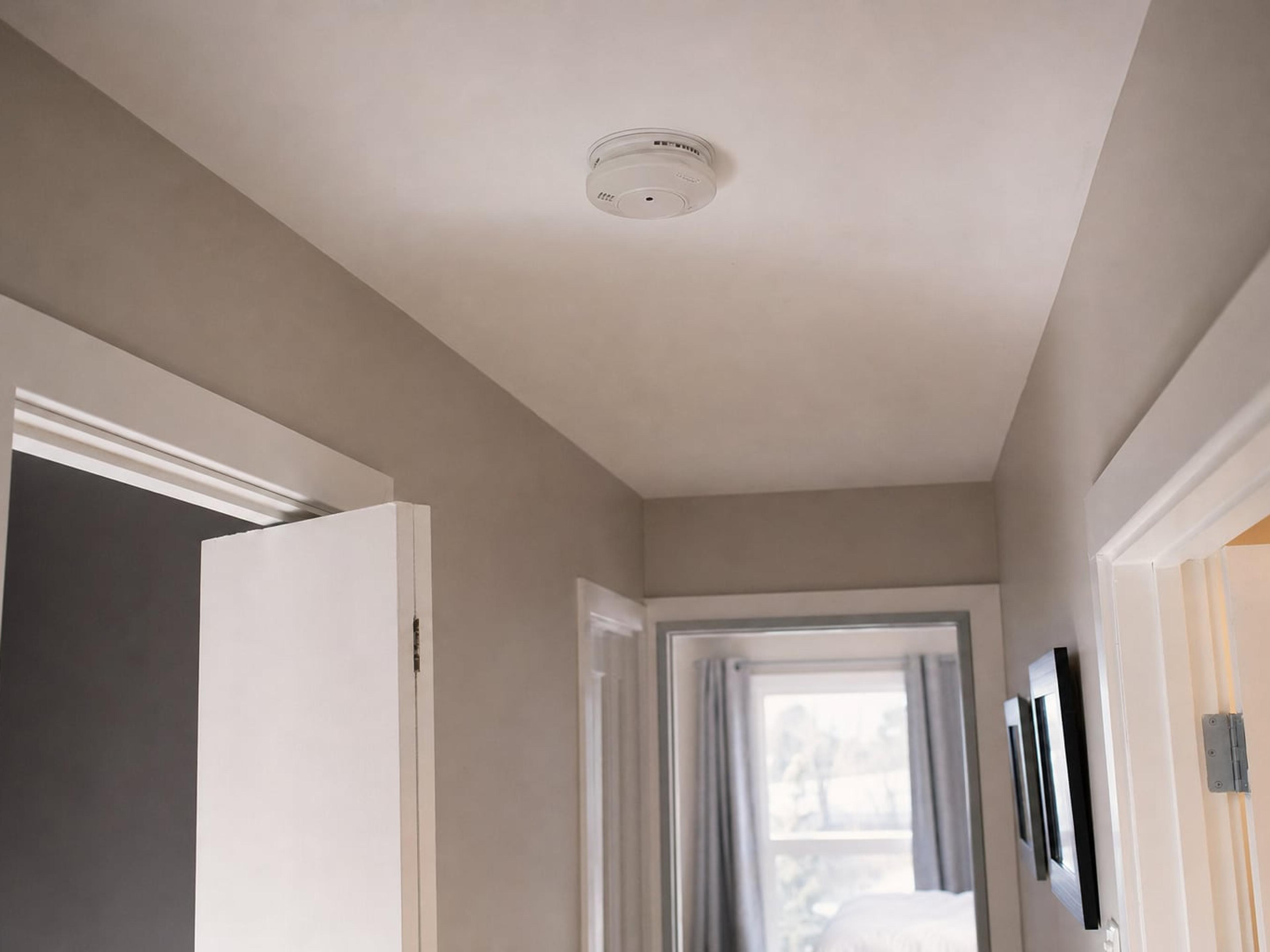
Electrical load is only part of the day. The National Fire Protection Association's Thanksgiving page covers holiday cooking safety. Stay in the kitchen while using the stovetop, keep towels and packaging away from heat, and confirm smoke alarms work before guests arrive.
Planning Kitchen Circuits After the Holiday
If the same breaker trips every year, the kitchen may have too few circuits. An electrician can map what each breaker serves and look at options such as:
- A separate circuit for the microwave, refrigerator or other fixed appliance
- Additional 20-amp countertop circuits
- GFCI protection, plus AFCI protection where the adopted code requires it
- A subpanel or panel work if there is no suitable space for new breakers
Our dedicated kitchen circuit service covers these additions. New wiring normally needs a permit and inspection, and the local inspector decides how the New York code adopted for your project applies.
What Drives the Cost
Adding a circuit near the panel through an unfinished basement is the lowest scope. Several circuits or a finished ceiling make it moderate. Plaster walls, a full panel, or old wiring that must be corrected push it higher. We put the scope in a written estimate.
Kitchen Circuits in Albany, Delmar and Colonie
Older Albany kitchens were often updated cosmetically without adding circuits, and additions in Delmar and Colonie can leave the kitchen far from the panel. Those details matter more than the age of the cabinets.
I-ReM Electric & Construction is a fully insured contractor working throughout the Capital Region. Meet our Albany electrician team or look at electrical safety checks if you are not sure what is behind the counter.
Book a Kitchen Circuit Review
Write down what was plugged in when the breaker tripped and take a photo of the panel with its door open. Leave the metal cover in place.
Tired of taking turns with the toaster? Request a kitchen circuit estimate before the next holiday dinner.
Frequently Asked Questions About Kitchen Circuits
Can I run an air fryer and a slow cooker on the same circuit?
Often on a 20-amp circuit, if their combined draw and anything else connected stays within its capacity. Check both nameplates. On a 15-amp circuit, a large air fryer should run alone.
Why did only half of my kitchen outlets lose power?
They are probably split between two circuits, or one group is fed through a tripped GFCI. If resetting once does not restore power, have it checked.
Does an oven trip the countertop breaker?
A correctly wired electric range normally has a separate circuit. If using the oven affects counter outlets, have an electrician investigate.
How many circuits should a kitchen have?
New kitchens generally need at least two 20-amp countertop circuits, with other circuits for fixed appliances as required. Your appliances and the locally enforced code determine the final count.
Is it bad to keep resetting the breaker?
Yes. Repeated resets can keep feeding a fault or overheated connection. Reset once after reducing the load, then get help if it trips again.
Related Articles
Have a Project In Mind?
Tell us about your project and we'll follow up with an estimate.