
Tesla Wall Connector vs. NEMA 14-50 Outlet: Which Is Better for Your Garage?
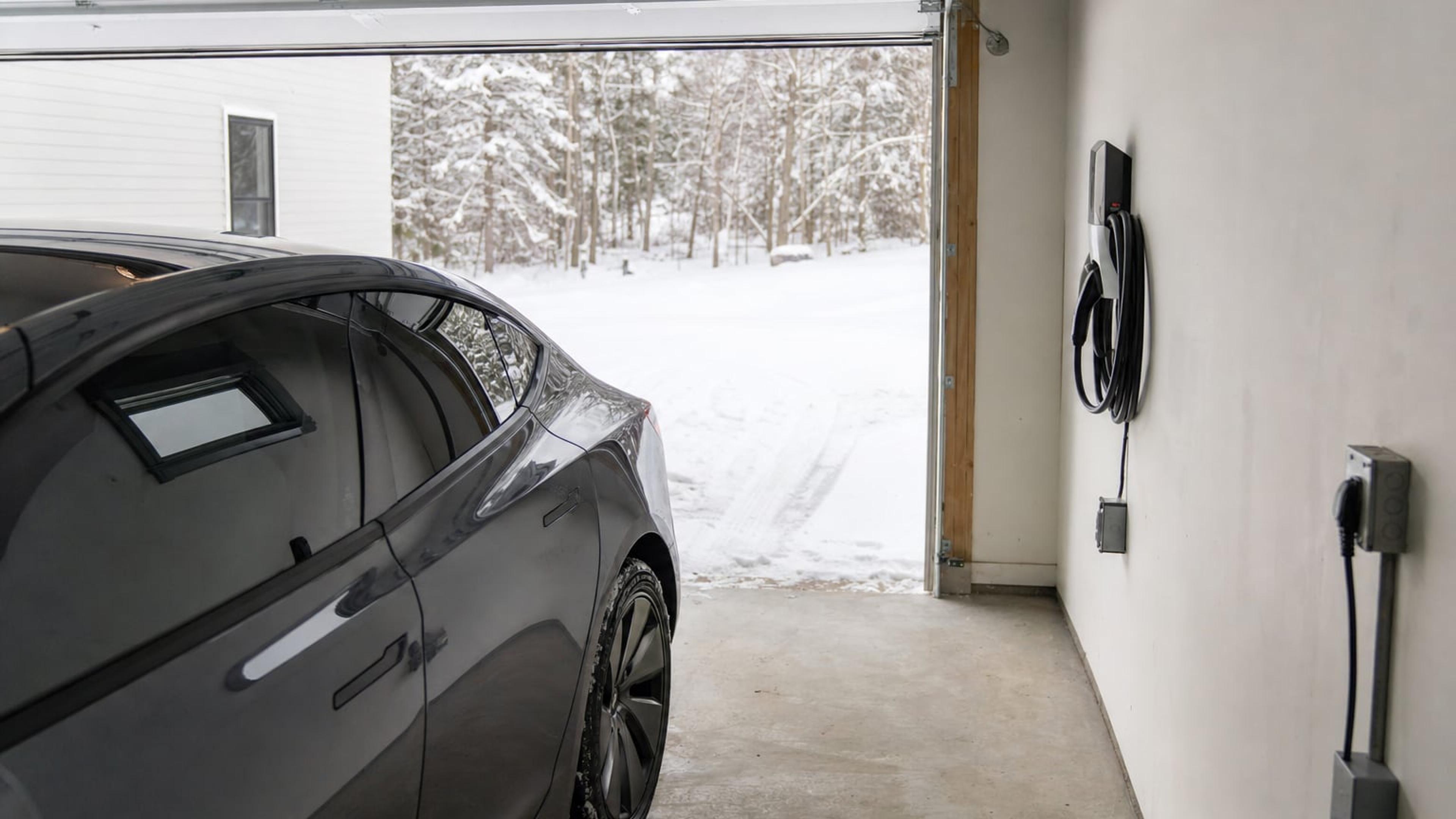
For most Tesla owners who park in the same garage every night, a hardwired Tesla Wall Connector is the better long-term choice. It charges faster (up to 48 amps on a 60-amp circuit), has no receptacle to wear out, and avoids the GFCI nuisance-tripping issues that can come with a 240-volt outlet under newer code editions. A NEMA 14-50 outlet with a Mobile Connector still makes sense if you want portability, drive modest daily miles, or plan to move soon.
Both options are Level 2 charging on a dedicated 240-volt circuit, and both will charge most cars overnight. The differences are speed, durability, code requirements and flexibility. Here is how they compare.
The Two Options in Plain Terms
Tesla Wall Connector: a wall-mounted charger that is hardwired directly to a dedicated circuit. Nothing plugs into a receptacle. Current versions are available with the Tesla (NACS) connector or the J1772 connector for other EVs.
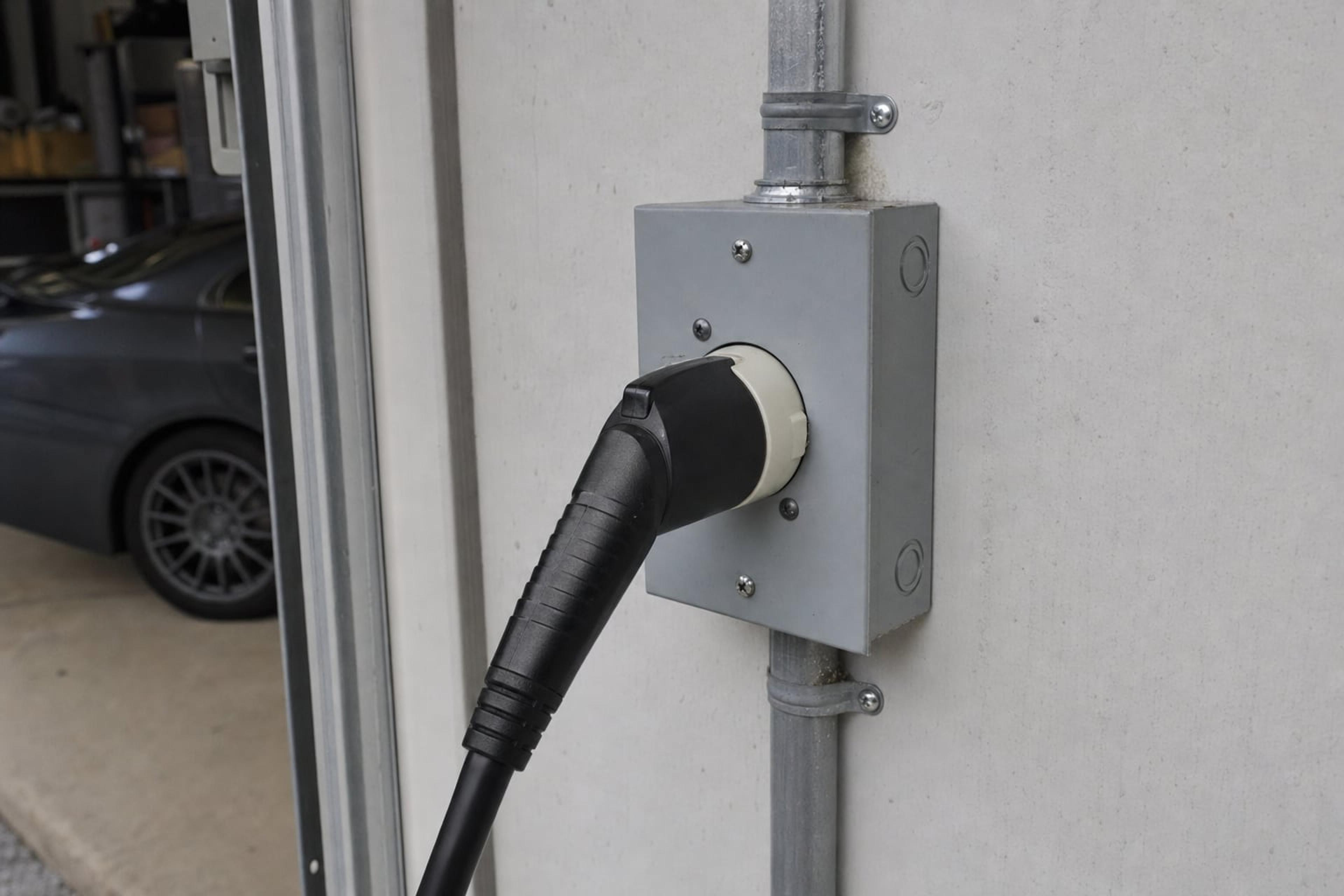
NEMA 14-50 outlet: a 240-volt, 50-amp receptacle, the same style used for electric ranges and RVs. You plug in a portable charging cord, such as Tesla's Mobile Connector with a 14-50 adapter, or a plug-in charger from another brand.
Side-by-Side Comparison
| Factor | Tesla Wall Connector | NEMA 14-50 + Mobile Connector |
|---|---|---|
| Maximum charging current | Up to 48 A on a 60 A circuit | Typically 32 A with Tesla's Mobile Connector adapter |
| Connection | Hardwired | Plug-in receptacle |
| Receptacle wear | None | Receptacle can loosen and heat with heavy use |
| GFCI considerations | Charger has built-in protection; no receptacle GFCI needed | Newer code editions may require GFCI, which can nuisance trip |
| Portability | Stays with the house | Cord can travel with you |
| Multiple EVs | Power sharing between units | One car per receptacle |
| Relative installation cost | Moderate | Lower to moderate |
Exact pricing depends on your panel, wire run and charger choice, so treat this as a relative comparison rather than a quote.
Charging Speed: How Much Does It Matter?
The Wall Connector can deliver up to 48 amps when it is installed on a 60-amp circuit, which is where most of its speed advantage comes from. It can also be set lower to match a smaller circuit if your panel is tight on capacity.
A 14-50 receptacle sits on a 50-amp circuit. Because EV charging is a continuous load, a charger on that circuit can draw at most 40 amps, and Tesla's Mobile Connector with the 14-50 adapter is limited to 32 amps. Check the rating of the specific cord you own, since equipment changes over time.
In practice, both setups refill a typical daily commute overnight. The faster Wall Connector matters more if you drive long distances, have two EVs sharing time, or want to recover range quickly in winter, when cold batteries charge more slowly and preconditioning uses more energy.
The NEMA 14-50 Outlet: Pros and Cons
Why People Choose It
A 14-50 is flexible. The same receptacle works with a Tesla Mobile Connector, a plug-in charger from another brand, or an RV. If you move, you can take the cord with you. The installation is often a bit simpler, and many charger brands sell plug-in models built for it.
Receptacle Wear and Heat
A 14-50 was originally designed for appliances like ranges, which are plugged in once and left alone. EV charging is different: long sessions at high current, often every night, and sometimes daily unplugging. Inexpensive receptacles can loosen over time, and a loose connection creates heat. Melted or discolored 14-50 receptacles are a known problem with cheap hardware and poor terminations.
If you go this route, use an industrial-grade receptacle from an established manufacturer, have the terminals torqued to the manufacturer's specification, and avoid plugging and unplugging the cord at the wall every day. Leave the cord plugged in and coil the vehicle end instead.
The GFCI Question
Newer editions of the National Electrical Code expanded GFCI requirements in garages to include 240-volt receptacles, and later editions added GFCI requirements for receptacles that serve EV charging. Which rules apply to you depends on the code edition your municipality enforces and how the inspector applies it, so this is worth confirming before installation.
The practical issue is that EV charging equipment has its own built-in ground-fault protection, and stacking it behind a GFCI breaker can occasionally cause nuisance tripping. A hardwired Wall Connector avoids the receptacle requirement entirely, which is one reason many electricians now recommend hardwiring for permanent garage installations.
The Tesla Wall Connector: Pros and Cons
Why It Usually Wins in a Garage
- Faster charging when your panel can support a 60-amp circuit
- No receptacle to loosen, overheat or trip
- Power sharing: multiple Wall Connectors can split one circuit's capacity, which helps households adding a second EV
- Cleaner setup: the cable hangs on the unit instead of a cord on the floor
- Outdoor rated, which matters for driveway installations
The Tradeoffs
The Wall Connector stays with the house, and replacing it means disconnecting wiring rather than unplugging. Installation can cost somewhat more because of the larger circuit when you want full speed. Tesla's Wall Connector support page lists installation requirements and the circuit sizes the unit can be configured for.
What Your Panel Decides
Before choosing either option, an electrician should confirm your service can handle the new load. A 60-amp circuit for a full-speed Wall Connector is a significant addition, and older 100-amp services may need a lower charger setting, load management or an upgrade. Our guide on Level 2 EV charger installation cost in New York explains how panel capacity drives the project, and our article on signs your electrical panel needs an upgrade covers the warning signs.
Either option requires a dedicated circuit, and adding one typically requires a permit and inspection in Capital Region municipalities.
Which Should You Choose?
Choose the Wall Connector if: you park in the same garage or driveway every night, you drive long distances, you have or plan a second EV, or you want the most durable setup.
Choose a 14-50 if: you want portability, you rent or plan to move, you already own a compatible plug-in charger, or you use the same outlet for an RV.
EV Charging in Clifton Park, Halfmoon and Malta
Many newer homes in Clifton Park, Halfmoon and Malta have 200-amp panels and attached garages close to the panel, which makes a full-speed Wall Connector a straightforward project. Older homes elsewhere in the region may need more planning.
I-ReM Electric & Construction is a fully insured electrical contractor serving Saratoga County, Albany, Schenectady and the rest of the Capital Region. We install EV chargers, including hardwired Tesla Wall Connectors and industrial-grade 14-50 receptacles, along with dedicated circuits and panel upgrades. Homeowners can also reach our Clifton Park electrician team directly.
Get an EV Charger Quote
A few photos of your panel and garage are usually enough to tell you which option fits your home and what circuit size your panel can support.
Ready to charge at home? Get an EV charger quote and we will recommend the right setup for your garage.
Frequently Asked Questions About Tesla Wall Connector vs. 14-50
Is a Tesla Wall Connector faster than a 14-50 outlet?
Usually, yes. The Wall Connector can charge at up to 48 amps on a 60-amp circuit, while Tesla's Mobile Connector with a 14-50 adapter is limited to 32 amps. Both charge most cars fully overnight.
Does a NEMA 14-50 in a garage need GFCI protection?
Newer National Electrical Code editions require GFCI protection for many garage receptacles, including 240-volt ones and those used for EV charging. Requirements depend on the code edition your municipality enforces, so confirm with your electrician or inspector.
Why do some 14-50 outlets melt?
Low-quality receptacles and loose terminal connections can overheat under hours of high-current charging. An industrial-grade receptacle, properly torqued terminals and less frequent plugging and unplugging greatly reduce that risk.
Can I use a Tesla Wall Connector with a non-Tesla EV?
Yes. Tesla offers a J1772 version of the Wall Connector for other EVs, and NACS-equipped vehicles from other brands can use the standard version.
Is a hardwired or plug-in EV charger better?
For a permanent garage installation, hardwired chargers are generally more durable and avoid receptacle wear and GFCI issues. Plug-in chargers are better if you want to take the charger with you or share the outlet with other equipment.
Related Articles

Have a Project In Mind?
Tell us about your project and we'll follow up with an estimate.