Winter Power Outage Checklist for Capital Region Homes: Generators, Sump Pumps and Safe Restarts
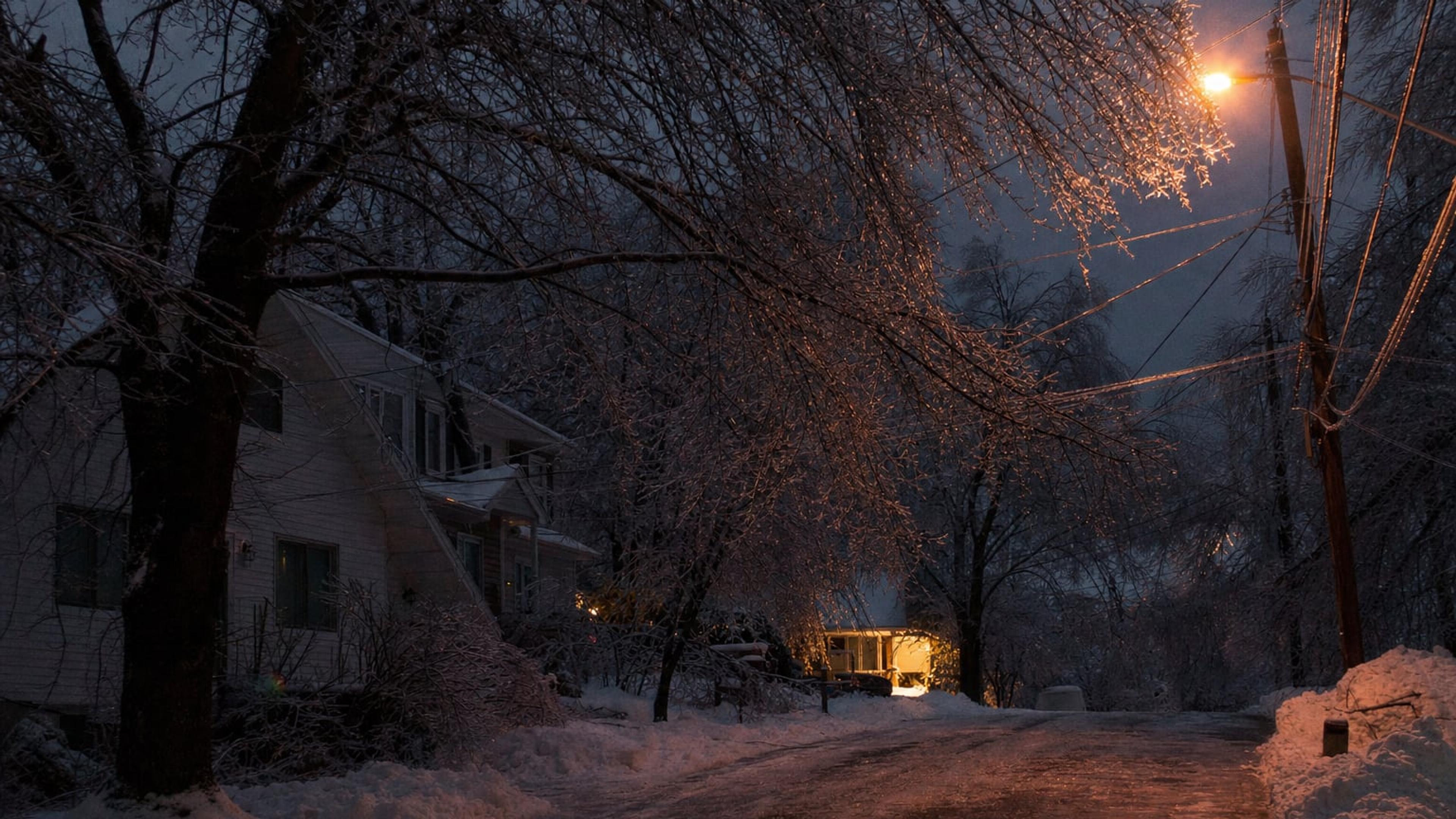
A good power outage checklist comes down to five things: report the outage to your utility, keep everyone warm without creating a carbon monoxide risk, run any generator outdoors and connect it only through a transfer switch or interlock, protect your basement and pipes from water and freezing, and bring power back gradually once the lines are restored. Prepare those pieces before the first ice storm and a winter outage becomes an inconvenience instead of an emergency.
Ice storms, heavy wet snow and wind regularly knock out power across the Capital Region, sometimes for days. Use the checklist below to get ready now.
Before the Storm: Get Your Home Ready
Build a Basic Outage Kit
Keep flashlights and fresh batteries in an easy-to-find spot, plus a battery-powered or hand-crank radio, a charged power bank for phones, a few days of water and shelf-stable food, any medications you need, and warm blankets or sleeping bags.
Test Smoke and Carbon Monoxide Alarms
Outages are when people bring out generators, kerosene heaters and fireplaces, so working alarms matter most. Test every smoke and CO alarm and replace batteries in any unit that uses them. We handle smoke and carbon monoxide detector installation and replacement.
Know What You Need to Keep Running
List the circuits that matter most in a winter outage: the furnace or boiler (most gas and oil systems need electricity to run), the sump pump, the refrigerator, a well pump if you have one, and a few lights and outlets. That list decides what size generator and transfer equipment you need.
When the Power Goes Out
1. Report the Outage
First check your panel; if only part of the house is dark, a tripped breaker may be the cause. Otherwise, report the outage even if you assume neighbors already have. National Grid and NYSEG both accept outage reports online, through their mobile apps and by phone, and both offer outage maps with restoration estimates. Keep your account number handy.
2. Stay Away From Downed Lines
Treat every downed or sagging wire as live. Stay well back, keep children and pets away, and report it to your utility and 911.
3. Protect Food and Stay Warm Safely
Keep refrigerator and freezer doors closed. According to Ready.gov's power outage guidance, a closed refrigerator keeps food cold for about four hours, and a full freezer holds its temperature for about 48 hours. Dress in layers and never use a gas stove, oven or grill to heat your home.
4. Unplug Sensitive Electronics
Turn off or unplug computers, TVs and other electronics so a surge when power returns does not damage them. Leave one light switched on so you know when the power comes back.
Portable Generator Safety
A portable generator is one of the most useful tools in a winter outage, and one of the most dangerous when it is used incorrectly. The two serious risks are carbon monoxide and backfeeding.
Carbon Monoxide: Outdoors Only, Far From the House
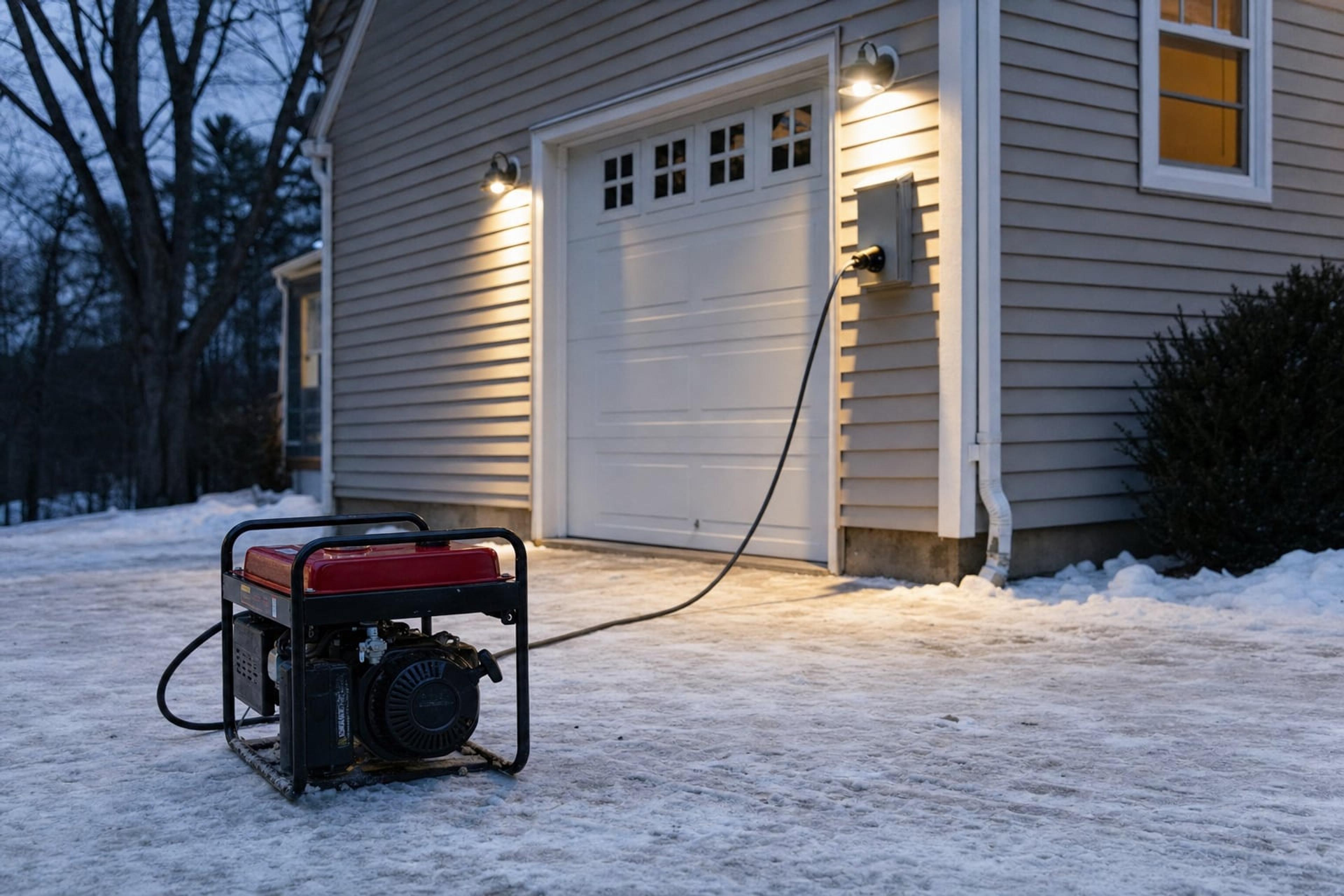
Generator exhaust contains carbon monoxide, a gas you cannot see or smell that can kill within minutes. Never run a generator inside the house, in a basement, in a crawlspace or in an attached garage, even with the garage door open. Federal safety agencies recommend placing it at least 20 feet from the house with the exhaust pointed away from doors, windows and vents. Clear snow around it and keep it dry with a generator cover or canopy. If anyone feels dizzy, nauseated or unusually tired, get everyone into fresh air and call 911.
Backfeeding: Never Plug a Generator Into a Wall Outlet
Connecting a generator to the house by plugging a double-ended cord into a dryer or wall outlet is called backfeeding. It sends power out through your service and onto the utility lines, where it can be stepped up by the transformer and electrocute line workers restoring power. It can also damage your wiring and equipment when utility power returns.
The Safe Connection: Inlet Box Plus Transfer Switch or Interlock
The right way to power household circuits from a portable generator is a power inlet box mounted on the outside wall, connected to either a manual transfer switch or a panel interlock kit. Both physically prevent the generator and the utility from feeding the house at the same time. The installation needs to be sized to your generator and typically requires a permit and inspection.
Or Skip the Cords Entirely
A standby generator with an automatic transfer switch starts on its own within seconds of an outage. Our guide to whole-house generator installation cost explains what drives the size and price of those systems.
Sump Pumps and Frozen Pipes
Give Your Sump Pump a Backup
A sump pump without power cannot protect a finished basement during a winter thaw. Common backup options:
| Backup Option | How It Works | Things to Consider |
|---|---|---|
| Battery backup pump | Second pump runs on a battery when power fails | Limited run time; batteries need periodic replacement |
| Water-powered backup | Uses municipal water pressure to pump water out | Needs city water, not a well; check local plumbing rules |
| Generator circuit | Sump pump included on generator-fed circuits | Works as long as the generator runs |
Prevent Frozen Pipes
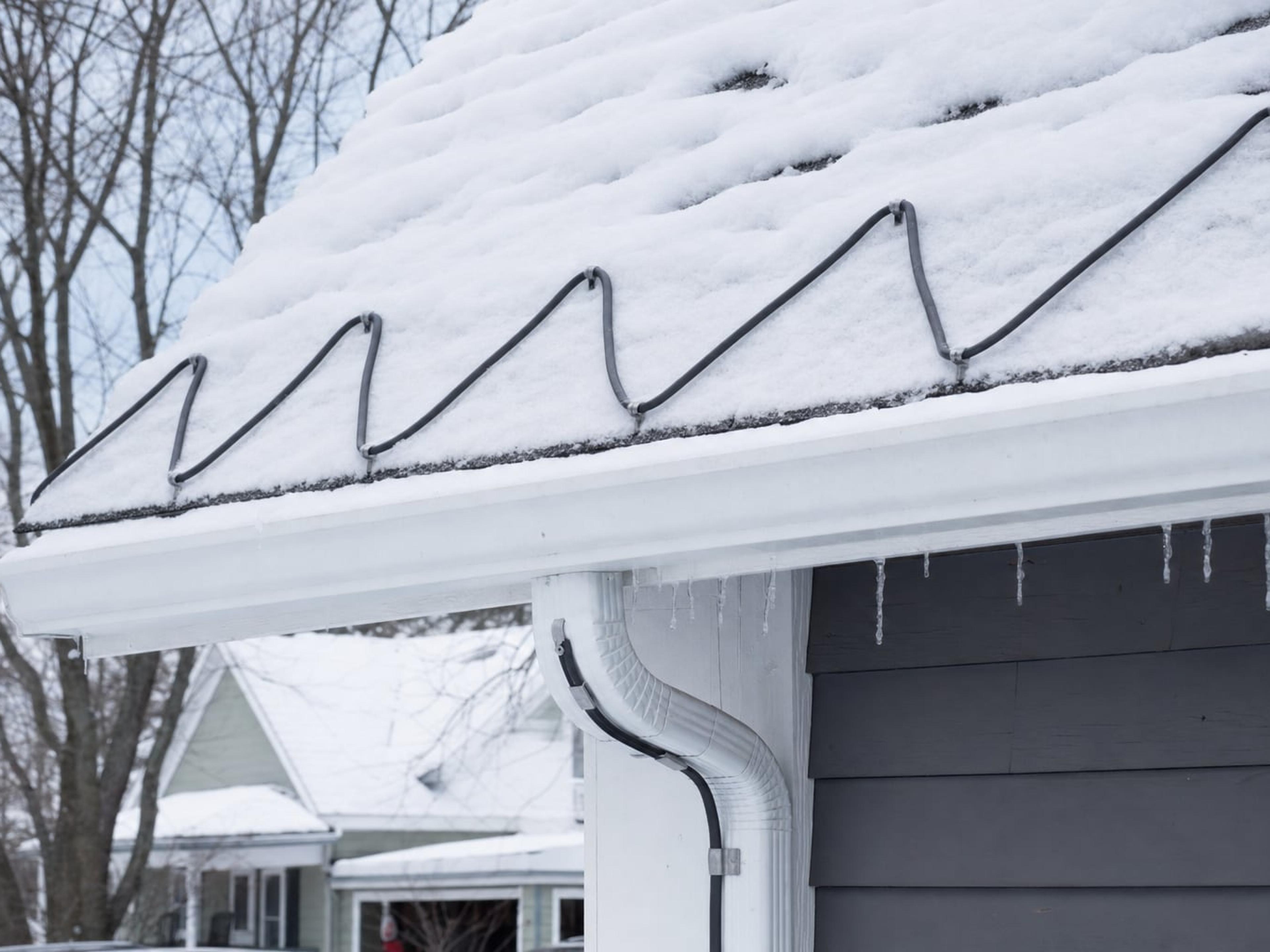
If the heat is out for an extended period, open cabinet doors under sinks on outside walls, let faucets drip slightly, and keep the house closed up. If a long outage is expected in deep cold, consider shutting off the main water valve and draining the lines. Never use an open flame to thaw a frozen pipe.
When the Power Comes Back: Safe Restarts
1. Shut the generator down first. Return the transfer switch or interlock to utility power before reconnecting, following the equipment's instructions. 2. Wait a few minutes. Power can flicker on and off while crews finish repairs. 3. Restore loads gradually. Plug in and turn on electronics and large appliances one at a time instead of all at once. 4. Watch for problems. Flickering lights, a burning smell, buzzing at the panel, or outlets that do not work after the outage need attention.
If you notice any of those, our emergency electrician guide covers what to do next, and our emergency service team can help. A whole-house surge protector also helps guard appliances against restoration surges.
Generator Hookups in Ballston Spa, Burnt Hills and Clifton Park
Many homes around Ballston Spa, Burnt Hills and Clifton Park rely on well pumps that stop the moment the power does, which makes a safe generator connection one of the most practical upgrades available.
I-ReM Electric & Construction is a fully insured electrical contractor serving Saratoga County, Albany, Schenectady and the rest of the Capital Region. We install generators, inlet boxes, transfer switches and panel interlocks, and we can help you decide which circuits belong on backup power. Homeowners can also reach our Ballston Spa electrician team directly.
Get Ready Before the Next Ice Storm
The best time to plan a generator connection is before the forecast turns. A short visit tells you whether an inlet and interlock will cover your needs or whether a standby system makes more sense.
Want backup power this winter? Get a generator quote and we will help you choose a safe setup for your home.
Frequently Asked Questions About Winter Power Outages
Can I run a generator in my garage with the door open?
No. An open garage door does not move carbon monoxide out fast enough, and the gas can seep into the house. Run the generator outdoors, well away from the house, with the exhaust pointed away from openings.
Is it legal to plug a generator into a dryer outlet?
Backfeeding through a dryer or wall outlet is unsafe and violates electrical code. It can electrocute utility workers and damage your home's wiring. Use an inlet box with a transfer switch or interlock.
What is the difference between a transfer switch and an interlock?
A transfer switch is a separate unit that moves selected circuits from utility to generator power. An interlock is a mechanical plate on your main panel that prevents the main breaker and generator breaker from being on at the same time. Both are safe when installed correctly.
How do I report a power outage to National Grid or NYSEG?
Both utilities accept outage reports online, through their apps and by phone. Have your account number ready, and check their outage maps for restoration estimates.
What should I do first when the power comes back?
Switch your generator connection back to utility power, wait a few minutes, then turn electronics and large appliances back on one at a time. Call an electrician if anything flickers, smells or does not come back on.
Related Articles
Have a Project In Mind?
Tell us about your project and we'll follow up with an estimate.